
How Does Digital Networking Drive and Execute B2B Marketing Strategies?
Advertisement
Effective B2B marketing is challenging to master. When designing their marketing plan, marketers have a lot to balance between the need for creativity, financial constraints, and channel selections. Your audience, however, will ultimately determine the success of your marketing efforts.
Your promos and adverts will probably go unnoticed if you are not correctly targeting your buyer persona. If you could use digital B2B networking to drive and get more deals closed, wouldn't it be a dream? This blog explains just that, so let’s get started!
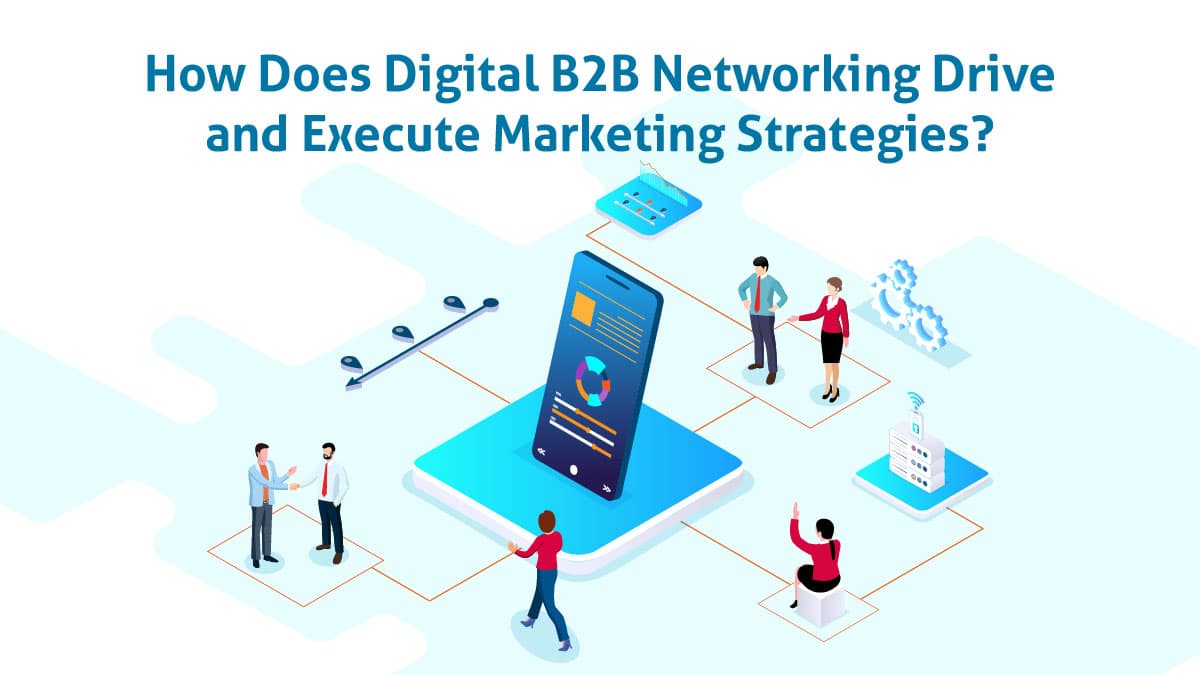
 Today, digital B2B networking is an essential component of any marketing strategy. As a result, digital networking has become a solution for many businesses to stay in business.
Participating in networking events, according to professional marketing leaders, fosters direct feedback on projects, opinions, and ideas. In addition, at some of these events, one can get the perspective of potential clients on new ideas and plans. Attending industry events is an excellent way to exchange relevant information and knowledge with others in your industry or customers.
Networking, according to research, can contribute to more job and business opportunities as well as improved performance. Building and strengthening connections, exchanging ideas, broadening knowledge, and cultivating mutually beneficial relationships all contribute to professionals’ ability to innovate while also improving overall work quality and job satisfaction. Many successful networkers recognize the value of developing and consistently maintaining these networks long before they need them.
Digital B2B Networking On the Rise
In recent years, digital B2B networking has become an important component of relationship building when combined with offline networking. Social media allows you to connect before, during, and after an offline event. LinkedIn is most likely the best platform for B2B networking and locating industry-related groups. You can find all kinds of groups that match your target audience or industry by using this powerful social platform. Moreover, you can reach a larger audience whenever you want, increasing your visibility and availability.
Today, digital B2B networking is an essential component of any marketing strategy. As a result, digital networking has become a solution for many businesses to stay in business.
Participating in networking events, according to professional marketing leaders, fosters direct feedback on projects, opinions, and ideas. In addition, at some of these events, one can get the perspective of potential clients on new ideas and plans. Attending industry events is an excellent way to exchange relevant information and knowledge with others in your industry or customers.
Networking, according to research, can contribute to more job and business opportunities as well as improved performance. Building and strengthening connections, exchanging ideas, broadening knowledge, and cultivating mutually beneficial relationships all contribute to professionals’ ability to innovate while also improving overall work quality and job satisfaction. Many successful networkers recognize the value of developing and consistently maintaining these networks long before they need them.
Digital B2B Networking On the Rise
In recent years, digital B2B networking has become an important component of relationship building when combined with offline networking. Social media allows you to connect before, during, and after an offline event. LinkedIn is most likely the best platform for B2B networking and locating industry-related groups. You can find all kinds of groups that match your target audience or industry by using this powerful social platform. Moreover, you can reach a larger audience whenever you want, increasing your visibility and availability.
 Too often, people attend networking events to collect business cards for following up in the hopes of a transaction shortly. While that strategy can be effective, it is no longer as effective as it once was. So, how do we go about it today? Let’s have a look.
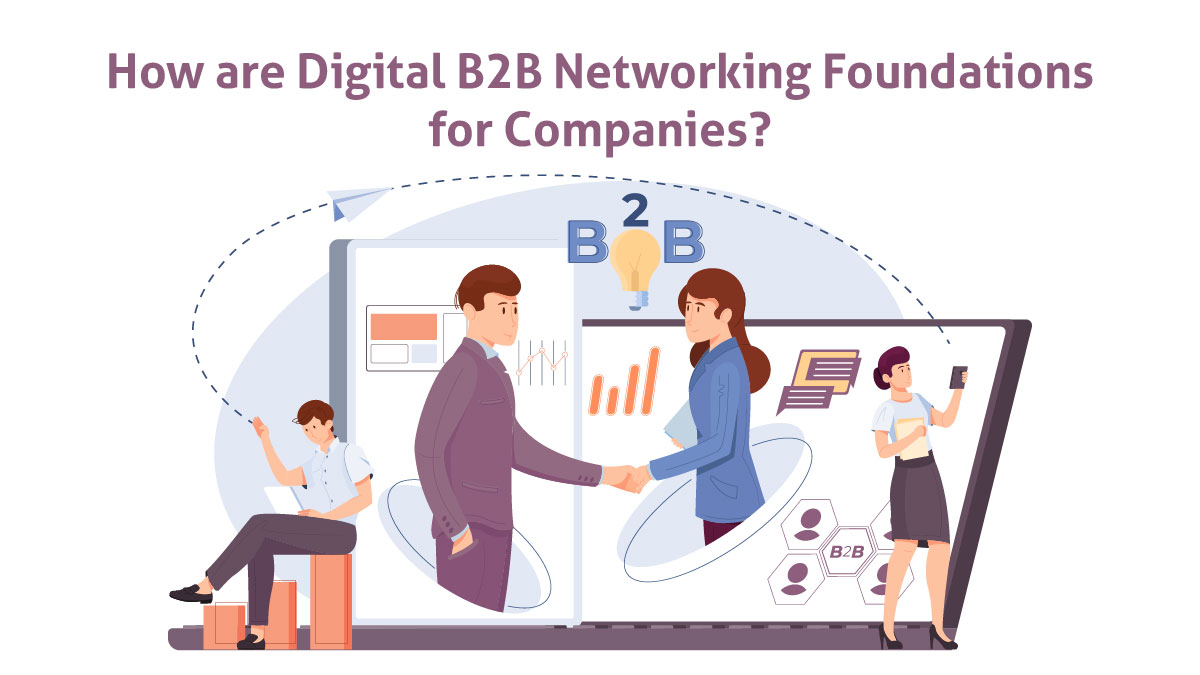
How are Digital B2B Networking Foundations for Companies?
Today, digital B2B networking is an essential component of any marketing strategy. As a result, digital networking has become a solution for many businesses to stay in business.
Participating in networking events, according to professional marketing leaders, fosters direct feedback on projects, opinions, and ideas. In addition, at some of these events, one can get the perspective of potential clients on new ideas and plans. Attending industry events is an excellent way to exchange relevant information and knowledge with others in your industry or customers.
Networking, according to research, can contribute to more job and business opportunities as well as improved performance. Building and strengthening connections, exchanging ideas, broadening knowledge, and cultivating mutually beneficial relationships all contribute to professionals’ ability to innovate while also improving overall work quality and job satisfaction. Many successful networkers recognize the value of developing and consistently maintaining these networks long before they need them.
Digital B2B Networking On the Rise
In recent years, digital B2B networking has become an important component of relationship building when combined with offline networking. Social media allows you to connect before, during, and after an offline event. LinkedIn is most likely the best platform for B2B networking and locating industry-related groups. You can find all kinds of groups that match your target audience or industry by using this powerful social platform. Moreover, you can reach a larger audience whenever you want, increasing your visibility and availability.
Why Go Digital?
In the digital age, digital B2B networking has become critical to successfully run a business. In the marketing and sales environment, social networks are the first point of reference as channels through which companies can introduce their projects and success stories. LinkedIn has managed to position itself at the forefront of personal brand management tools in the digital environment.Network, Network & Network
Networking can help you generate new sales leads, strengthen relationships with existing contacts, and learn useful market information. Check that you have the proper network in place before you need it. Develop relationships along the way so that when the time comes, you can confidently ask for assistance. Building rapport over time makes the act of reaching out less strenuous and opens the door to opportunities that would not have been available if you flew solo. There are several ways to create your network, including the conventional and some not-so-conventional ways.- Digital Networking Events
- Ask for Introductions
- Bumble Bizz
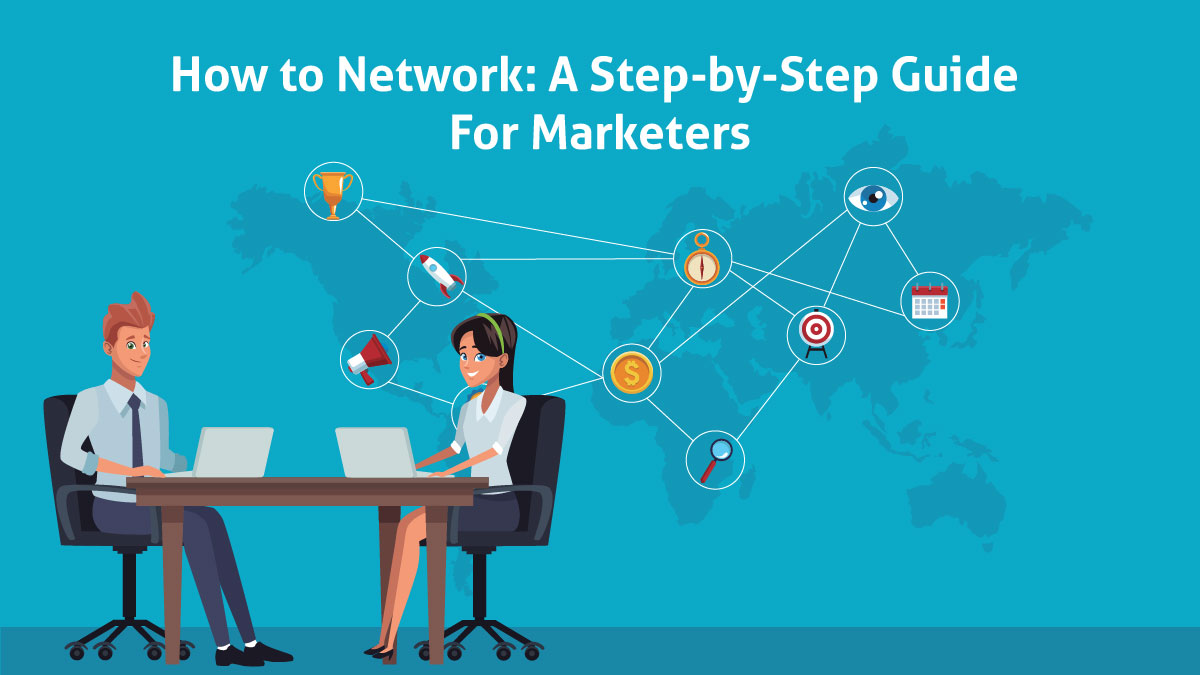
How to Network: A Step-by-Step Guide For Marketers
Too often, people attend networking events to collect business cards for following up in the hopes of a transaction shortly. While that strategy can be effective, it is no longer as effective as it once was. So, how do we go about it today? Let’s have a look.
Step 1: Identify Your Reason to Network
To develop a successful networking strategy, you must first understand why you want to network in the first place. When considering why you want to network, determine how much of your networking time and effort you should devote to your various goals.- Discover people, businesses, and introducers
- Establish your market expertise
- Strengthen relationships with existing connections
- Learn more about your market
- Upskill in the relevant domain
Step 2: Work On the Contacts You Need
Whenever you meet someone interesting, consider them a potential life contact. Some relationships, on the other hand, will inevitably be brief; they may serve as specific stepping stones toward your medium- and long-term goals. Estimate the number of contacts you’ll need to achieve your networking objectives.Step 3: Identify Potential Connections
A small-business owner or manager typically needs a network of 80-100 people to achieve their networking goals. It is important to find the right contacts, but even more important to be authentic. People can tell when you are being fake, so be yourself and treat everyone with honesty and openness. People value genuine connections, so make an effort to get to know the people in your network on a personal level. Some key pointers to keep in mind:- List down potential introducers
- List down the roles or positions you are looking for
- Understand your target businesses
Step 4: Refine and Rework on Your Networking Plan
Keeping your network up-to-date is also beneficial. Digital connections are always influenced by the algorithms working in the background. Your activities and connections benefit in the long run with a fine-tuned network.- Are the connections still valid?
- Are they aligned to a mutual benefit?
- Are the connections beneficial for your growth?
- Are the connections accelerating your journey towards your goals?
Create Your Brand Consistency
When people look you up online, the first thing they see is your online profile, so establish yourself and keep your information updated. The more strategic your profile building and online presence, the closer you will be to the top of the search results.Personal Branding
There are many ways to increase your online influence. You can blog, post on social media, comment on posts, and tag those you want to connect with. You can also use social listening tools to join relevant online communities and stay part of topical discussions among your target audience. Sharing your thoughts on business and industry topics can help you gain influence and meaningfully engage others. LinkedIn is a great platform for building online influence. It's a professional network where you can connect with people in your industry and share your knowledge and expertise. However, it's important to remember that online influence is not just about being active on social media. It's also about building relationships and trust with others. So don't forget to network offline as well.Final Thoughts
Digital B2B networking has become a potent force in the ever-changing world of business-to-business (B2B) marketing, generating and implementing compelling plans. Businesses are now able to connect, engage, and collaborate with their target audience in ways that were previously unthinkable thanks to digital platforms and online communication channels. Digital B2B networking is a powerful tool that can be used to drive and execute B2B marketing strategies. By connecting with potential customers and partners online, businesses can build relationships, share valuable content, and generate leads.Advertisement