
Digital Asset Management 101: Get Your DAM(n) Software!
Advertisement
How Digital Asset Management (DAM)s Your Digital Asset Flow?
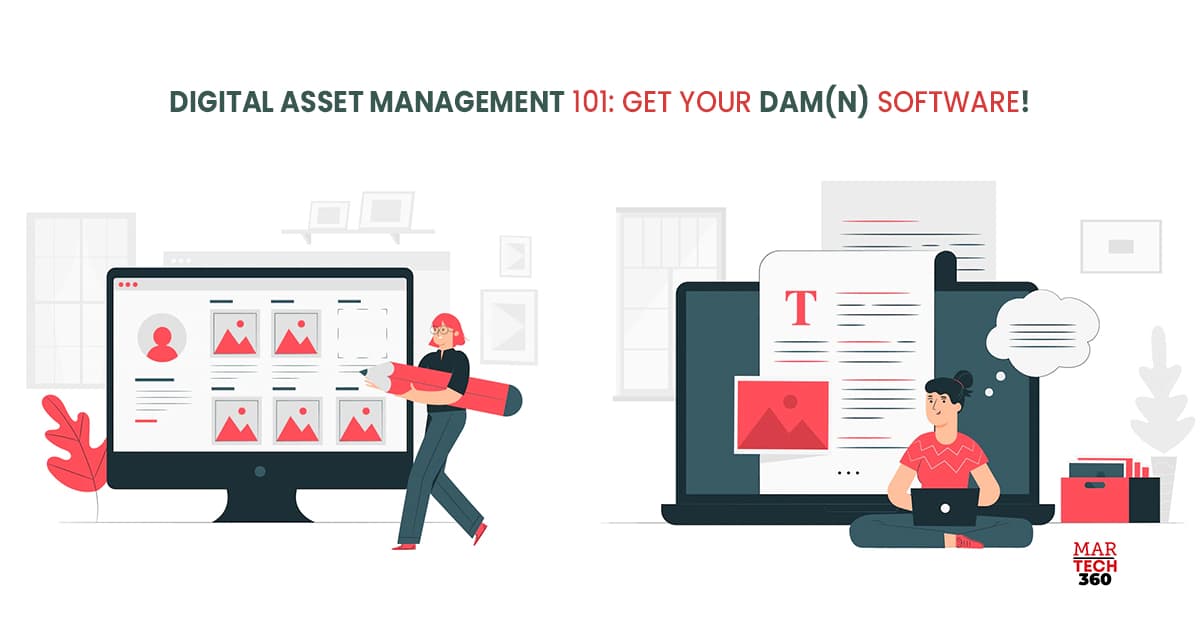
Digital asset management (DAM) systems enable organizations to store, organize, find, retrieve, and share their entire digital content catalog from a single location. Peers, employees, clients, contractors, and other key stakeholders have controlled access to their entire digital content library, which includes images, photos, creative files, video, audio, presentations, documents, and more. In the end, the best DAM systems organize your digital assets so that their value to your brand is maximized. Its features allow you to automate workflows, set asset licensing expiration dates, and set varying levels of user access for files, folders, projects, and entire campaigns. DAM software can also show you how creative assets are performing through in-app analytics. [caption id="attachment_24128" align="aligncenter" width="800"] Digital asset management (DAM) systems[/caption]
A cloud-based digital asset management system centrally stores all of a brand's assets, allowing users to securely collaborate on content from anywhere. Feedback is attached directly to in-progress projects as workflows occur within the platform, ensuring that communication is never lost in translation or buried in email.
Digital asset management (DAM) systems[/caption]
A cloud-based digital asset management system centrally stores all of a brand's assets, allowing users to securely collaborate on content from anywhere. Feedback is attached directly to in-progress projects as workflows occur within the platform, ensuring that communication is never lost in translation or buried in email.
What Is A Digital Asset?
Any type of content that can be stored digitally, allowing you to manage, publish, create, and share content with anyone inside or outside your organization, is considered a digital asset. A digital collateral can be anything in today's rapidly changing digital ecosystem. Assets are files such as videos, photos, documents, music, and other media that contain the rights to use them. [caption id="attachment_24126" align="aligncenter" width="800"]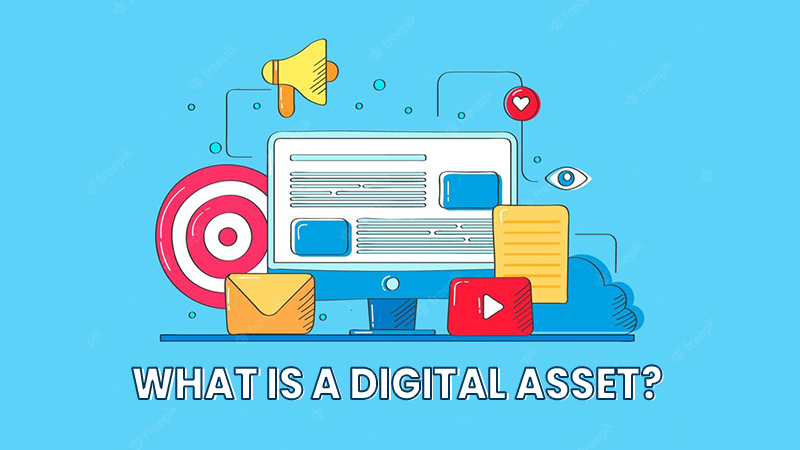 What Is A Digital Asset?[/caption]
They are ultimately the types of files and content collateral that are created and shared frequently throughout an organization. Advertisements, social media content, videos, and emails are all created and collaborated on by the marketing team. For instance, when working with operations, process documentation, blueprints, and workflow diagrams come into play. Furthermore, if you work with a network of vendors or providers, you may be producing images and content that you want to make public.
Almost every department interacts with digital assets that fuel your organization's growth and success. With a digital asset management (DAM) platform, team members from every department in your company can efficiently search, collaborate, and share assets.
What Is A Digital Asset?[/caption]
They are ultimately the types of files and content collateral that are created and shared frequently throughout an organization. Advertisements, social media content, videos, and emails are all created and collaborated on by the marketing team. For instance, when working with operations, process documentation, blueprints, and workflow diagrams come into play. Furthermore, if you work with a network of vendors or providers, you may be producing images and content that you want to make public.
Almost every department interacts with digital assets that fuel your organization's growth and success. With a digital asset management (DAM) platform, team members from every department in your company can efficiently search, collaborate, and share assets.
Benefits of Digital Asset Management
Quality content is a powerful determinant in the market. It can assist organizations in connecting with customers, strengthening brand perception, and ultimately driving revenue. Here is a glimpse of what all digital asset management usually accomplishes in collaboration with businesses globally.Organize content
 New assets are constantly being created as there is an ongoing need for marketing content. However, working with several pieces of content collateral makes it easier to misplace them. A centralized location where users can find what they need, when they need it, keeps teams on track and content accessible. Furthermore, DAM solutions can eliminate the costs associated with recreating lost materials because they are secure and easy to retrieve once they are stored in the system.
Streamline Workflow
 DAM has several tools to improve content creation efficiency and agility. To expedite and improve creative production, version control, on-the-fly conversions, and workflow approval functionality reduce time spent on manual tasks such as legal approval, brand review, and photoshoot workflows. DAM improves cross-team collaboration and lowers the likelihood of costly miscommunications.
Repurpose Content
 DAM systems can elevate the value of content collaterals by reusing and repurposing them while providing a complete picture of available content. Adapting existing copy, imagery, video, or other creative content for a new purpose is more than just reusing content; it is also about reimagining content to serve new purposes. With easy access to past and current content, teams can breathe new life into old projects while saving time, money, and resources by building on assets that already exist.
Brand consistency.
 Teams must have the freedom to use the software that allows them to do their best work. This frequently results in multiple systems across teams, if not the entire company. However, work must still be completed in a consistent and efficient manner. Through integrating tools, teams have secure access to the same content in whatever system they are using. This ensures that content and data are consistent across teams and channels.
Tech Stack Integration
 IT professionals are in charge of integrating marketing technologies into a cohesive stack that reduces redundancies and improves system and team collaboration. IT professionals are responsible for integrating marketing technologies into a unified stack that reduces redundancies and improves system and team collaboration. A digital asset management platform provides IT professionals with a centralized hub to power all of the organization's go-to marketing technologies. IT teams can use pre-built integrations and APIs to connect the DAM solution to other systems, such as platforms for content management, sales enablement, marketing automation, social media, customer relationship management, and more.
Digital Asset Management (DAM) In Business
Adopting digital asset management to help organize, manage, and protect their content investment benefits organizations of all sizes. Any organization with digital assets can (and should) implement the processes, guidelines, strategies, and tools. DAM systems assist a wide range of user types and roles in saving time, collaborating more effectively, and ultimately driving more revenue for their organization.Food and beverage
 DAM is used by food and beverage companies to maintain brand consistency and to create more efficient content workflows. DAM tools enable these businesses to centralize their content in a searchable, shareable library that is accessible to teams and partners all over the world. As a result, quality, approved assets that meet brand standards are available quickly and on demand. But that isn't all. DAM is approached differently in the food and beverage industry.
Healthcare
 Digital asset management assists healthcare organizations in controlling the accuracy of the information they share, whether they are promoting their services or educating the public. A DAM solution, with its permission-based access and password-protected portals, ensures that only the appropriate content is used by the appropriate people, regions, and departments. When information changes, system administrators simply update the revised assets in the DAM system, and the changes are automatically reflected everywhere those assets are hosted online. This assists the healthcare industry in managing compliance and preventing errors that could jeopardize their flawless reputation as a trusted and reliable brand.
Media and entertainment
 DAM is used by media and entertainment companies to simplify workflows so that they can meet the demands of their fast-paced, high-stakes industry. DAM systems address this need in a variety of ways. They enable bulk importing and editing of images, videos, and audio files captured at live events, ensuring that assets are ready for use right away. Permissions are used to ensure that only authorized user groups have access to certain content. They also reduce risk by automatically enforcing licensing terms and use restrictions, giving those with a busy schedule one less thing to worry about.
Print and publishing
 DAM tools are used in the print and publishing industries to streamline production operations from a single content hub. Publishers and printers can easily share files for proofing or printing with collaborators, agencies, and vendors using a DAM system. If they need to make changes, they can retouch catalog or publication pages or quickly revert to a previous creative version in the DAM system. When revisions are complete, content sent through shared links and portals automatically updates with the most recent files — no more uploading and downloading to shared folders or printing delays.
Travel and tourism
 Transportation, recreation, dining, and hospitality businesses all thrive in the travel and tourism industry. DAM assists these organizations in controlling the quality of their assets and streamlining their workflows, allowing them to get their best content in front of potential travelers more quickly. The travel and tourism industry is worth billions of dollars. The right DAM system provides this vertical's businesses with the tools, brand control, and insights they need to present their most impactful, must-travel-here-now imagery.
Agencies
 DAM is used by agencies to increase the productivity of their marketing, advertising, creative, and design efforts, allowing them to provide better and faster results to their clients. Some agencies buy a digital asset management solution and use it in-house to manage assets, workflows, and deadlines for their numerous clients. Other agencies perform asset management activities in collaboration with the client and on the client's DAM platform. Other agencies, on the other hand, only provide a service in which they maintain and administer a client's DAM system.
Understanding Why and How To Choose a DAM
Digital assets include more than just files. They are valuable assets in which brands invest time and money to create or acquire. Without a digital asset management system, organizations can easily lose track of their content. This means that people must waste valuable time looking for missing files. Creatives end up recreating pre-existing images, graphics, and collateral. Unused assets are lost forever, as are irreplaceable photos and videos from once-in-a-lifetime events. These are just a few of the numerous reasons why businesses require a digital asset management system. [caption id="attachment_24130" align="aligncenter" width="800"]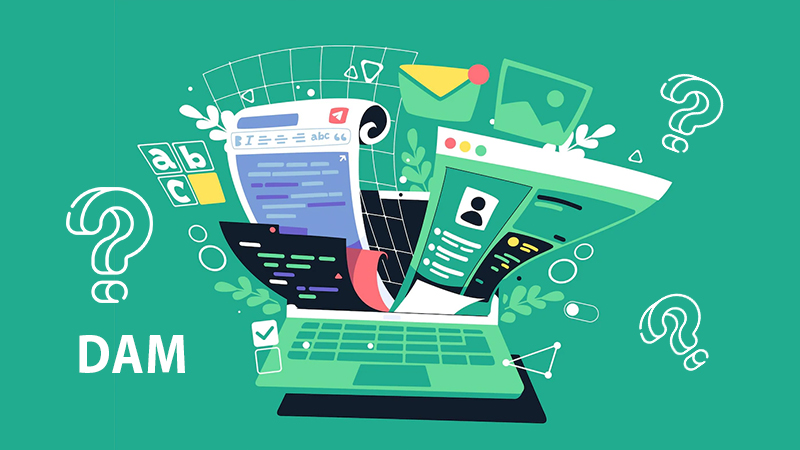 Why and How To Choose a DAM[/caption]
Choosing the best DAM software begins with a strategy. It's critical to understand your team's needs as well as how digital asset management technology will fit into your overall digital ecosystem. You can accomplish this by outlining use cases, comparing features, and other methods. Allow yourself time to explore and even test drive different solutions via free trials or proof-of-concept (aka sandbox) sites during the vendor evaluation process. DAM solutions vary in their capabilities and strengths. The key is to identify your requirements and priorities and then match them to what a system can provide.
Your use cases will also aid in the definition of your must-have capabilities. The features you'll need will most likely range from simple (content organization) to company-specific. Outlining your processes could be a great way to capture all of the capabilities that your digital asset management solution requires.
Why and How To Choose a DAM[/caption]
Choosing the best DAM software begins with a strategy. It's critical to understand your team's needs as well as how digital asset management technology will fit into your overall digital ecosystem. You can accomplish this by outlining use cases, comparing features, and other methods. Allow yourself time to explore and even test drive different solutions via free trials or proof-of-concept (aka sandbox) sites during the vendor evaluation process. DAM solutions vary in their capabilities and strengths. The key is to identify your requirements and priorities and then match them to what a system can provide.
Your use cases will also aid in the definition of your must-have capabilities. The features you'll need will most likely range from simple (content organization) to company-specific. Outlining your processes could be a great way to capture all of the capabilities that your digital asset management solution requires.
Conclusively..
Branding has always remained an integral aspect of any organization which is determinant to its growth and success as much as their products. This translates to the fact that your content pool needs to be always on its toes to give high performing content collaterals to the organization. You need to understand your organizational needs as a whole before you even think of integrating a DAM into your process. Digital asset management systems are always a significant investment in any organization that ensures cross departmental collaboration as well as even cross country. Therefore, choose wisely before investing. Go (DAM)ming! Read More: Why Are Content Management Systems Important In Digital Marketing Strategy?
Advertisement