

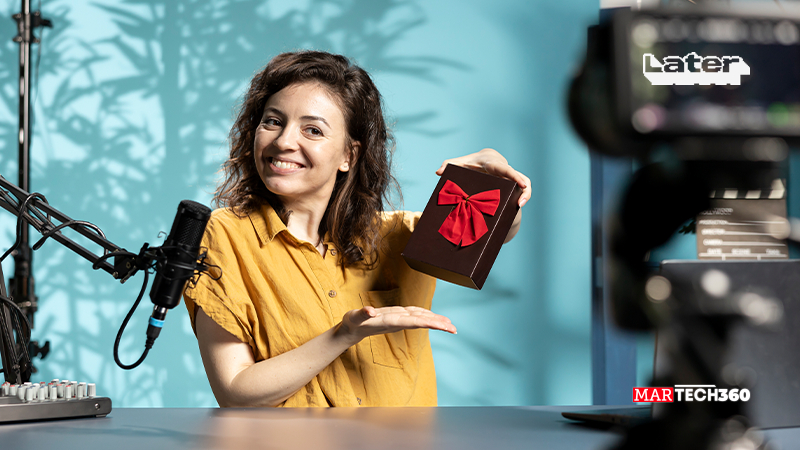
With Later’s release of Creator AEO, which is an Answer Engine Optimization service tailored to creator marketing, there is now a significant transformation that has happened in the way content from influencers is optimized for the emerging world of AI-powered discovery. This comes as a response to the understanding that standard social media optimization techniques or even SEOs are not sufficient anymore for the modern consumer who turns to answer engines such as ChatGPT, Perplexity, Gemini, and Google AI Overviews.
Based on the announcement, Creator AEO aims at helping creators and brands increase their visibility in AI-powered responses and searches, as opposed to concentrating solely on ranking in conventional search engines and social media platforms. According to the company, the tool utilizes creator marketing insights, social data analysis, and AI optimization approaches in order for brands to be discovered in new AI-powered search environments.
The launch comes at a critical moment for the advertising and marketing industry. Over the last two years, generative AI platforms have rapidly transformed how users search for information online. Instead of browsing through pages of search results, consumers increasingly ask AI systems for direct recommendations, summaries, and product suggestions. This shift is creating an entirely new visibility economy where brands compete not just for search rankings or social engagement, but for citations and recommendations inside AI-generated responses.
Also Read: Publicis Acquires LiveRamp to Strengthen AI and Data-Driven Advertising Future

The terms AEO and GEO have been used increasingly by industry professionals to describe the change from SEO to Answer Engine Optimization and Generative Engine Optimization. In contrast to the traditional process of SEO, which is concerned with keywords and rankings, AEO involves developing structured and authoritative content for the interpretation and summarization by AI.
The creator of the platform AEO, Later, seems tailor-made to help connect influencer marketing with this new AI discovery layer that is being developed. The firm already has created an ecosystem for influencer marketing and social intelligence analysis by tracking millions of influencers and billions of signals on the internet. By extending its insights into AI visibility, Later seems ready to capitalize on creator content as an important authority factor in AI searches.
This could be a huge game-changer for the future of creator marketing. Traditionally, influencer marketing campaigns have been highly dependent on metrics related to engagement on social platforms. The new trend in using artificial intelligence technology for discovering influencers is set to disrupt the process of influencer marketing. Influencers’ content could now function as source content used by AI technology to generate recommendations.
This represents a whole new strategy for brands. It is no longer about using influencers solely to drive social interactions, but using creator-generated content as discoverability infrastructure fueling AI-powered responses from more than one platform.
Implications for the advertising and marketing industry are significant. With the expansion of AI-based search experiences, companies may have to consider changing their approaches toward content strategy, influencer marketing, and online presence. If the AI-based systems consider conversational authority and creator endorsements in their recommendation process, the current content marketing techniques based on search engine optimization might not always be effective.
The fact that studies have already been conducted on AI-based search engines implies that AI-produced answers might be retrieved in ways that differ from the conventional approach to retrieving sources. There are likely to be sources referenced by an AI-powered search that do not feature prominently in ordinary search results.
This change could have profound implications on the relevance of content created by creators within marketing ecosystems. Creators and influencers generally generate conversation-driven content which is highly contextual; precisely the kind of data that seems to interest AI-based recommendation engines.
With regards to marketing agencies and mar-tech companies, the launch of Later marks the growing importance of AI visibility optimization as a service. Marketing companies might soon offer creator AEO audits, AI citation tracking, conversational content optimization, and AI share-of-voice analysis besides their other influencer marketing and SEO services.
This will also emphasize the existing convergence between social media intelligence, SEO, and AI infrastructure. Social media is not simply an engagement platform anymore; it is now a source of information for recommendation engines and answer engines powered by AI.
If the company is running e-commerce, retail, consumer goods, beauty, travel, or lifestyles operations, the transformation might influence the ways in which customers will be acquired by the business. If the brand manages to optimize creator content with respect to AI, it will increase visibility in AI-driven shopping experiences.
Another critical implication concerns the measurement and attribution aspects. The conventional measures employed for influencer marketing were mostly concerned with engagement and referral traffic. However, in the age of AEOs, companies could start measuring factors such as citations by AEOs, visibility in conversation, inclusion in answers, and recommendation generated by AEOs.
Additionally, the emergence of Creator AEO coincides with the trend towards zero-click digital interactions, wherein answers are delivered to the user through AI interfaces without needing to access any other website. Such changes may impact future online browsing habits, as well as the economics of advertising and publishing.
On the other hand, with the increasing use of recommendation engines based on AI, there emerge several issues associated with transparency, algorithmic discrimination, and platform control. As a result, marketers and content creators will rely on AI technologies that decide what information gets presented, referenced, and recommended.
From a marketing perspective, it implies that success in the future could not only be based on engagement but also how well content is structured, contextualized, and analyzed by AI technology serving as an intermediary between the brand and the consumer.
Overall, the introduction of Creator AEO by Later is an indication of changes occurring in digital marketing. Creator marketing has moved from being about social influence to having discoverability capabilities enabled through AI technology. In light of the role of conversational AI and answer engines in helping consumers to find and analyze product information, brands that can leverage both creator authenticity and AI-powered discoverability will have unique competitive strengths.
Comments are closed.