

Forget hunches and gut feelings. Today’s marketing world demands precision, foresight, and a sharp understanding of customer actions. This isn’t science fiction; it’s the tangible power of predictive analytics for marketing. As leaders like CMOs, VPs, and Heads of Marketing, you know that understanding your customers is key to sustainable growth. It’s important to grasp not just who they are, but also what they will do next. Moving from descriptive analytics to predictive insights gives you an edge over competitors. This shift isn’t just theory, 86% of executives who have led predictive marketing initiatives for at least two years report increased ROI, and top-performing marketing teams, 92% of them, already rely on AI-powered predictive analytics to guide decisions. With AI marketing spend projected to grow from US$ 47 billion in 2025 to US$ 107 billion by 2028, the competitive gap is widening quickly.
Let’s get to the point. Using predictive analytics helps you predict customer behavior. This can lead to high ROI.
Demystifying the Predictive Powerhouse
Predictive marketing analytics uses past data, statistical methods, and machine learning. It helps find the chances of future results. It’s about finding patterns hidden in your customer data. This includes purchase history, website behavior, social engagement, and outside market signals. Imagine creating a smart radar system for your market. It always looks for signals that show future intent, risk, or opportunity.

Predictive models show what is likely to happen. This is different from traditional reporting, which just tells you what happened. Will this lead convert? Is that customer segment at high risk of churn? Which product is this individual most likely to buy next? What’s the optimal price point for this audience? Predictive analytics answers key questions. It turns raw data into useful insights. This feature is key to advanced marketing analytics tools. It changes the game from reacting to strategies to planning ahead.
How Predictive Analytics Actually Works
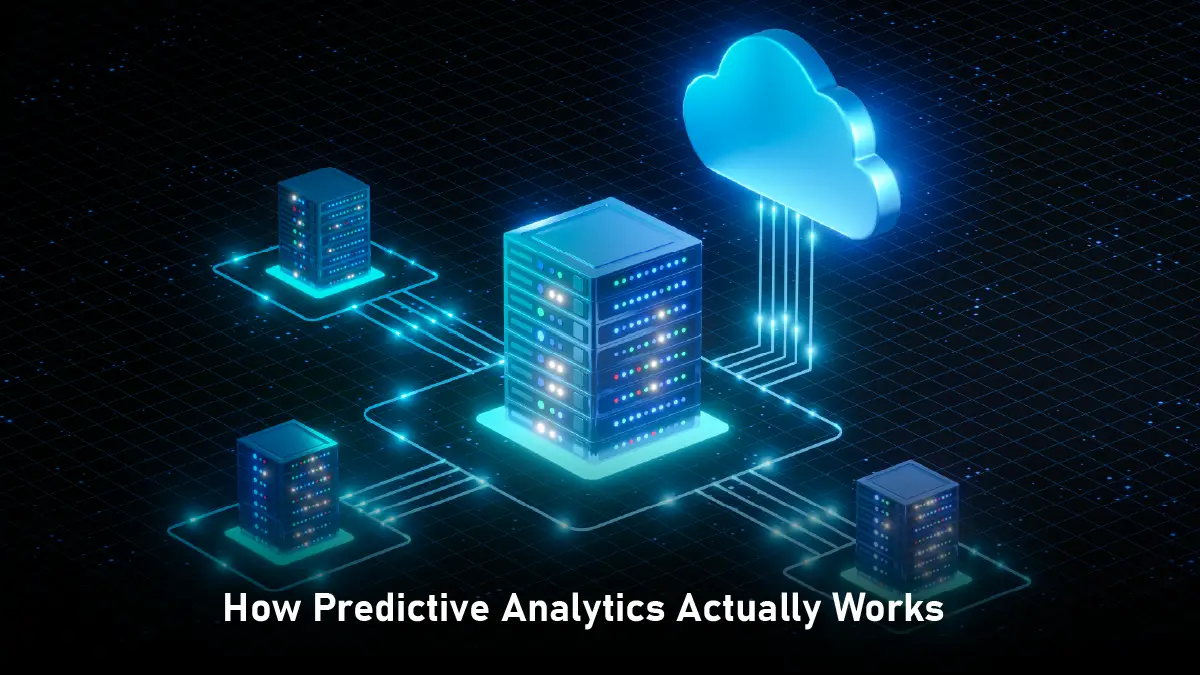
Understanding the mechanics demystifies the magic. The process isn’t monolithic but a sophisticated workflow. It starts with data aggregation. This means gathering both structured and unstructured data from all customer touchpoints. You collect data from your CRM, marketing platforms, website analytics, email systems, and social listening tools. You can use transactional databases and third-party sources. Just make sure to use them ethically and follow the rules.
This raw data is then rigorously cleaned and prepared. Garbage in, garbage out remains a fundamental truth. Data scientists and analysts fix missing values and correct inconsistencies. They also change data into a format that works well for modeling. This stage is key. Your predictions depend on how good your prepared data is.
Next is feature engineering. This process involves choosing and creating the key variables, or features, that affect your desired outcome.
For example, to predict churn, look at features like:
- recent purchase frequency
- customer service sentiment
- login activity
- payment history
Then, the modeling phase begins. The system uses machine learning methods. These include regression analysis, decision trees, random forests, and neural networks. It learns from past data. It finds patterns between your features and the target outcome. This includes whether customers churned or stayed. The model is trained on one set of data. It is then validated on another set. This checks if it has memorized the past, which is called overfitting. Finally, it is tested to see how accurate it is.
The output isn’t a vague prediction but a quantified probability or score. A churn risk score of 85% for Customer A and a 78% chance to buy Product Y for Lead B guide targeted marketing efforts.
Also Read: Predictive Analytics: A Business’s Psychic To Forecast Future Marketing Trends
Key Applications for Marketing Leaders
Predictive analytics leads to real business results. It turns predictions into actions, providing a strong ROI during the customer lifecycle.
- Hyper-Personalized Customer Acquisition: Move beyond basic demographic targeting. Predictive models identify prospects who behave like your best customers. Identify high-value customer patterns to find ‘lookalike’ audiences that convert better. This boosts lead quality, lowers customer acquisition costs, and makes marketing work better. Companies using AI for targeting have cut customer acquisition costs by 50%. Imagine your paid media budget targeting those whose online habits suggest high lifetime value. The efficiency gains are substantial.
- Next-Best-Action & Propensity Modeling: Stop guessing what offer to make next. Predictive analytics reveals what products, services, content, or promotions a customer wants at the moment. This provides tailored website experiences, unique email campaign ideas, and improved sales outreach tactics. A top cybersecurity firm used next-best-action for their sales team. This led to a big boost in cross-sell revenue. Reps now focus on the best solutions for each prospect’s needs.
- Churn Prediction & Proactive Retention: Finding customers who might leave before they actually do is very important. Predictive models spot at-risk individuals. They notice small changes in engagement, support tickets, or usage metrics. Marketing and customer success teams launch win-back campaigns. They offer tailored deals and personal check-ins. This strategy reduces churn rates and protects valuable recurring revenue. Retaining a customer is more cost-effective than acquiring a new one. Predictive retention makes this a reality. A 5% increase in customer retention can boost profits by 25% to 95%.
- Optimizing Customer Lifetime Value (CLTV): Predictive models help forecast the future value of customers and segments. This insight is revolutionary for resource allocation. Invest more in acquiring and nurturing customers predicted to have high CLTV. Tailor loyalty programs and engagement strategies based on predicted value trajectories. Spend your marketing budget where it will bring the best long-term returns, not just quick leads. A global B2B software company used CLTV prediction to change its marketing focus. They shifted resources to mid-tier accounts that showed high predicted future value. This change led to a significant increase in revenue from that segment.
- Demand Forecasting & Inventory Management: Predictive demand forecasting is key for marketing-focused businesses. This is especially true in e-commerce and manufacturing. It’s often tied to supply chain management. Predicting demand surges for specific products helps in several ways. It allows for better timing of campaigns. It also ensures efficient ad spending. Plus, it prevents costly stockouts or overstock. All these factors have a direct impact on profit.
Practical Steps for Leaders
 Harnessing predictive analytics power demands strategic foresight and commitment.
- Strong data foundation: Clean and integrated data leads to great possibilities for better predictions. On the other hand, when data sits in silos, it can hold back those opportunities. Consider upgrading your customer data platform or data warehouse. This upgrade will help you gain a clear and seamless view of your customers. Following data privacy rules like GDPR and CCPA helps you protect your most valuable asset: trust.
- Set clear business goals: Set clear, measurable goals that match your marketing and business strategy. Focus on your top priorities. Reduce churn by a specific percentage. You might also want to increase cross-sell revenue in a key segment. Focus your predictive efforts here to achieve maximum impact and ROI.
- Choose the right tools and partners: Pick from popular marketing analytics tools like Adobe, Salesforce, and HubSpot. Or check out specialized platforms such as Pecan AI, H2O.ai, and DataRobot. Think about your goals, the complexity of your data, your skills, and your budget. Work with data experts to build and test your first model.
- Cultivate Cross-Functional Collaboration: Predictive analytics isn’t a marketing island initiative.
It needs teamwork with several groups:
-
- IT for data infrastructure
- Data science for model building
- Sales for lead scoring and next-best action
- Customer success for churn prediction
Break down silos and foster a data-driven culture across the organization.
- Embrace Iteration and Learning: Predictive models aren’t a one-off deal. Customer behavior changes, markets shift, and new info rolls in. Keep tabs on how your model’s performing. Make sure it’s still accurately calling real-life outcomes. Retrain your models regularly with fresh data too. Think of this as an ongoing process where you’re always learning and fine-tuning.
Staying Ahead of the Curve
Predictive analytics is changing fast. It’s going from being a competitive edge to a basic need for good marketing leaders. We’re seeing drastic changes with artificial intelligence. It allows for better real-time predictions and automated decision-making. Explainable AI (XAI) is becoming more important. It helps marketers see why a model makes certain predictions. This builds trust and allows for better strategic changes.
Also, integrating predictive insights into marketing platforms is now seamless. Scores and recommendations automatically enter activation channels. This allows for dynamic and personalized customer journeys at scale. The marketers who master this integration will lead the pack.
The Imperative for Action
The message for marketing leaders is unequivocal. Predicting customer behavior with precision is crucial in today’s marketing landscape. It drives successful, profitable marketing strategies in the digital age. With predictive analytics, you take control and make informed decisions. It allows you to focus on customers and use strategies that clearly improve ROI.
Yes, the journey needs investment. Invest in data infrastructure, top talent, and cutting-edge marketing analytics tools. Foster a data-driven culture to drive business decisions. They provide lower acquisition costs. They also boost customer lifetime value, reduce churn, and improve resource use. It’s about shifting spend from guesswork to guaranteed outcomes.
Don’t wait for competitors to solidify their lead. Begin auditing your data readiness today. Identify one high-impact use case. Explore the technology landscape. Build the necessary cross-functional bridges. The future of marketing belongs to those who can see it coming. Predictive analytics is your most powerful lens. Focus it wisely, and watch your ROI soar.
Comments are closed.