

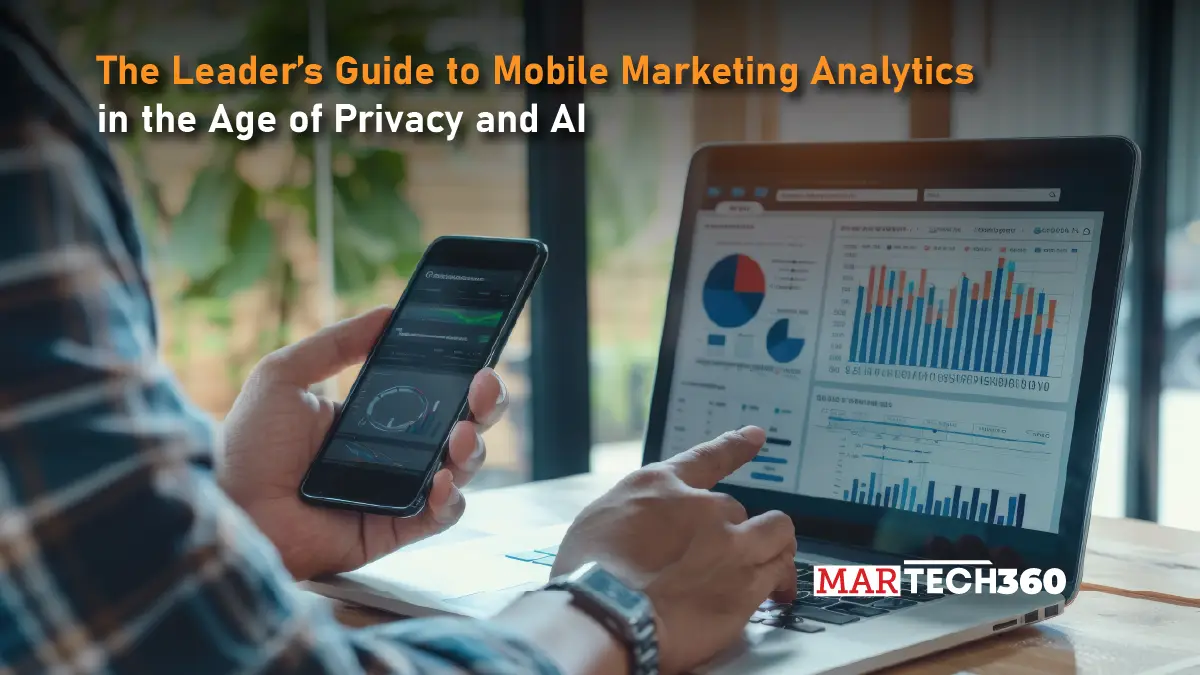
You probably already know it or heard of it. Mobile is where most customers start their journey. In the last quarter of 2024, mobile devices drove 62.54% of global website traffic (Statista). That’s more than half, and if you’re a leader, it’s a clear signal, you can’t ignore it.
The reality is many companies have the tools, dashboards, and even teams to track data, but few have a plan to turn it into action. Numbers get looked at, slides get shared, yet real decisions often happen without the full picture. Leadership makes the difference.
Now add AI into the mix, making insights smarter, and stricter privacy rules, which limit data use. The landscape is changing fast. This guide is for leaders who don’t just want charts, they want a roadmap to use mobile marketing analytics to guide strategy, drive growth, and actually make a difference.
Why Mobile Analytics is No Longer Optional for Leaders

Look around any coffee shop, train station, or office and you will see the same picture; people glued to their phones. Mobile is no longer a side channel; it has become the primary way customers interact with brands. Numbers back this up. For a business leader, that figure is not just trivia. It is a reminder that the customer journey now runs through mobile screens first.
But here’s the problem. Many companies have invested in tools, dashboards, and shiny reports, yet the impact often stops there. Metrics get tracked, slides get shown in meetings, and everyone nods. Still, the hard questions remain unanswered. Which campaigns actually create value? Which behaviors signal loyalty or churn? The truth is, this gap is not caused by a lack of data. It comes from a lack of leadership focus. Without it, mobile marketing analytics becomes a set of charts instead of a growth engine.
The path forward is to think of mobile analytics as the brain of your entire marketing technology stack. It shouldn’t sit in a silo. On the contrary, it may be the source of the whole revolution that includes the following. The automation, the personalization, the customer engagement, and AI-based forecasts. The executives are the ones who, when they consider the technology in such a manner, see the analytics not only as an observation from the past but also as a leading tool for their decisions. It becomes a steering wheel. And that is exactly what organizations need if they want to compete in a privacy-first, AI-shaped future.
The Evolved Framework from Metrics to Actionable Intelligence
When most leaders hear the term mobile marketing analytics, they think of campaign dashboards or click-through rates. That view is outdated. To compete today, analytics has to be understood as a framework that connects the entire customer journey rather than a set of disconnected reports. Customers do not see channels, they see experiences. Leaders need a structure that reflects that reality.
At the top of this framework sits acquisition. Knowing where new users come from is still essential, but the old game of just counting installs is no longer enough. What matters is linking those first interactions to lifetime value. Did the campaign attract high-value users or just drive vanity numbers?
The second layer is retention. This is where mobile analytics shows its real strength. EY’s 2025 Loyalty Market Study found that more than 80% of customers are willing to download loyalty apps, and many use them weekly. That makes retention not just an afterthought but a core metric of health. If leaders miss this, they miss the foundation of long-term growth.
Finally, the framework needs to embrace prediction. With the rise of AI, it is now possible to forecast behavior rather than simply react to it. This does not mean chasing every new technology, but it does mean using data to anticipate churn, highlight upsell opportunities, and guide decision-making in real time.
Taken together, these three layers; acquisition, retention, and prediction form a structure that leaders can actually act on. It is not about adding more charts. It is about connecting analytics to strategy in a way that fuels measurable growth.
Also Read: Top 5 AI Marketing Insights Helping Brands Unlock Next-Level Personalization
The Human and Technical Challenges
 Data privacy can feel like walking a tightrope. Leaders want personalized experiences, but regulations and platform rules make it tricky. Apple’s ATT and Google’s Privacy Sandbox have shaken things up, limiting how personal identifiers can be used. Still, there are ways to stay ahead. First-party data, consent management platforms, and privacy-preserving analytics let teams understand customer behavior without crossing lines. The reality is, respecting privacy isn’t just compliance. It builds trust, and trust drives growth.
Then there’s attribution. Did that last email really make the sale, or was it a mix of ads, push notifications, and in-app prompts along the way? Last-touch models often get it wrong. Multi-touch attribution, customized to your own customer journey, paints a clearer picture. The tricky part is defining what ‘success’ looks like for your business and making sure your analytics reflect that.
None of this works without the right people. Analytics isn’t only about dashboards or fancy tools. The real value comes from the people behind them. When you have a team of analytics engineers, data scientists, and marketing analysts working together, things can move quickly, but only if the insights make sense to everyone. The tricky part is communication. Leaders need to make sure the numbers are clear, that questions are welcome, and that the team’s recommendations actually guide decisions. Without that, even the best data can sit idle. That’s how mobile marketing analytics moves from a set of numbers to a real growth engine.
Advanced Tactics for Leaders
Here’s the thing about predictive analytics, it’s not some far-off tool anymore. You can actually see which new users might drop off in the next seven days. Knowing that is one thing. Acting on it is where the real difference happens. Imagine sending a timely push notification or a personalized in-app offer just when a user is starting to disengage. That small nudge can keep them around.
Take a food delivery app as an example. They noticed a lot of new users stopped ordering after the first week. By looking at engagement patterns, they could predict who was likely to churn. Then they sent targeted messages and small incentives. The outcome? Retention in those first critical 14 days jumped by 18 percent. Plus, lifetime value improve real numbers, not just charts.
What’s interesting is this mirrors the wider industry trend. Looking ahead to 2025, about one in four companies using generative AI are expected to deploy AI agents. And there’s evidence it pays off. Salesforce reports that 83 percent of sales teams using AI saw revenue growth, while only 66 percent of teams without it experienced the same. The takeaway? When predictive analytics is paired with smart automation, it’s not just theory. It actually drives results. Leaders who get this right aren’t waiting for the data to pile up, they’re shaping customer behavior before it even happens.
The Future of Mobile Marketing Analytics
 Have you ever wondered what marketing will look like in just a few years? AI-powered automation is already changing the game. Campaigns can now adjust themselves almost in real time, nudging the right users with offers or messages when they need them most. The catch is, it’s not about replacing humans. It’s about freeing leaders to focus on strategy instead of manually tweaking campaigns every day.
Then there’s the rise of immersive analytics. AR, VR, and even the metaverse are opening doors to data we’ve never had before. How long does someone linger in a virtual store? Which interactive elements actually grab attention? These are the questions that will matter more and more as experiences move off the traditional screen. Marketers who ignore this will be playing catch-up.
And finally, think about the martech stack itself. Mobile analytics isn’t just another tool sitting in the stack. It’s becoming the hub that connects web, offline channels, AI-driven insights, and even immersive experiences, all while respecting privacy. Without this central approach, things can quickly feel scattered and chaotic. But when leaders get it right, they can turn all that complexity into a system that actually helps make smarter, faster decisions.
The takeaway? Mobile analytics is not a side project anymore. It’s the engine that drives smart marketing, anticipates behavior, and helps brands stay one step ahead. Embrace it now, and you won’t just keep up. You’ll shape how customers experience your brand.
From Data to Decision to Leading with Mobile Intelligence
Think about it. Mobile marketing analytics isn’t just for dashboards or reports. It’s how leaders really see their customers. In a world where AI is shaping insights and privacy rules are constantly shifting, the edge goes to those who act, not just watch. The teams that use data to anticipate behavior, guide decisions, and make moves before competitors do will win. This isn’t theory, it’s the difference between reacting to numbers and shaping outcomes. Mobile intelligence lets leaders take control, steer growth, and create experiences customers actually value.
Comments are closed.