
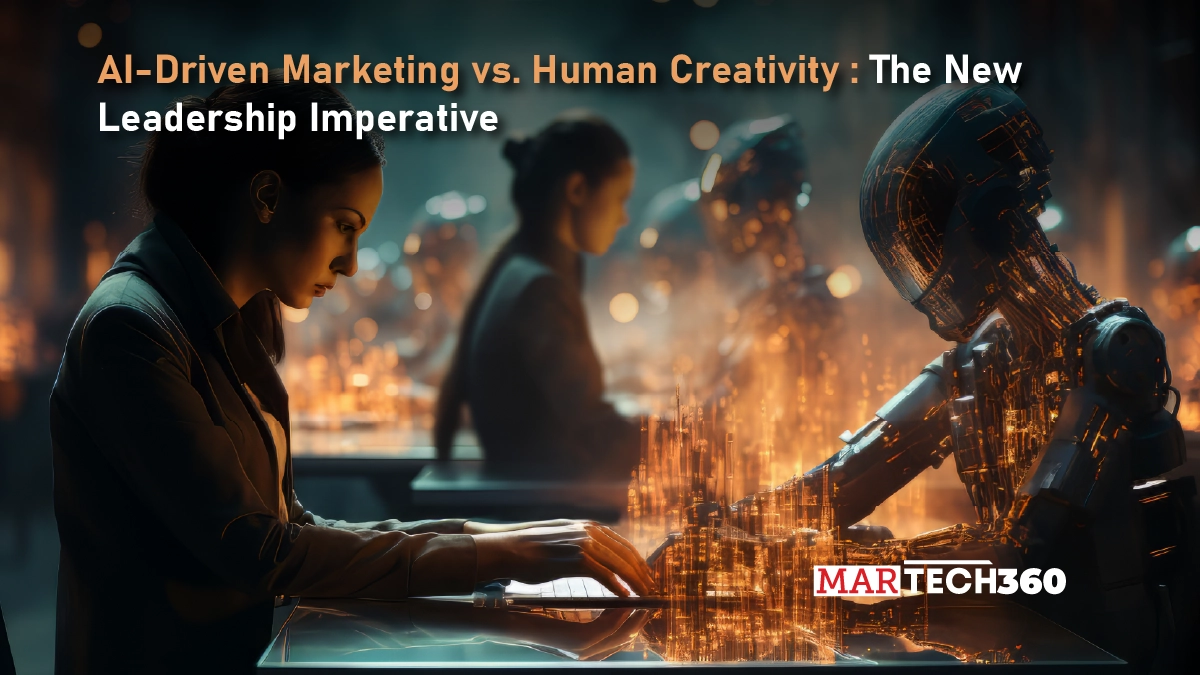
Marketing is moving fast, faster than any one person or even a team can really keep up with. There’s this weird tension now. On one side, data and AI can push campaigns forward at crazy speed. On the other, humans still bring the strategy, emotion, and gut feeling that makes marketing actually matter.
The real challenge, and what everyone’s talking about, is AI-Driven marketing vs. Human creativity. It’s not about picking one or the other. It’s about letting AI handle the repetitive stuff while humans focus on strategy, emotional impact, and creative leaps. That’s the new leadership challenge.
And the numbers show it. About 75% of marketers are either experimenting with or using AI. The high performers? They’re two and a half times more likely to have fully integrated AI into their marketing. The hybrid approach is where the advantage lies.
AI Driving Efficiency and Scale in Modern Marketing

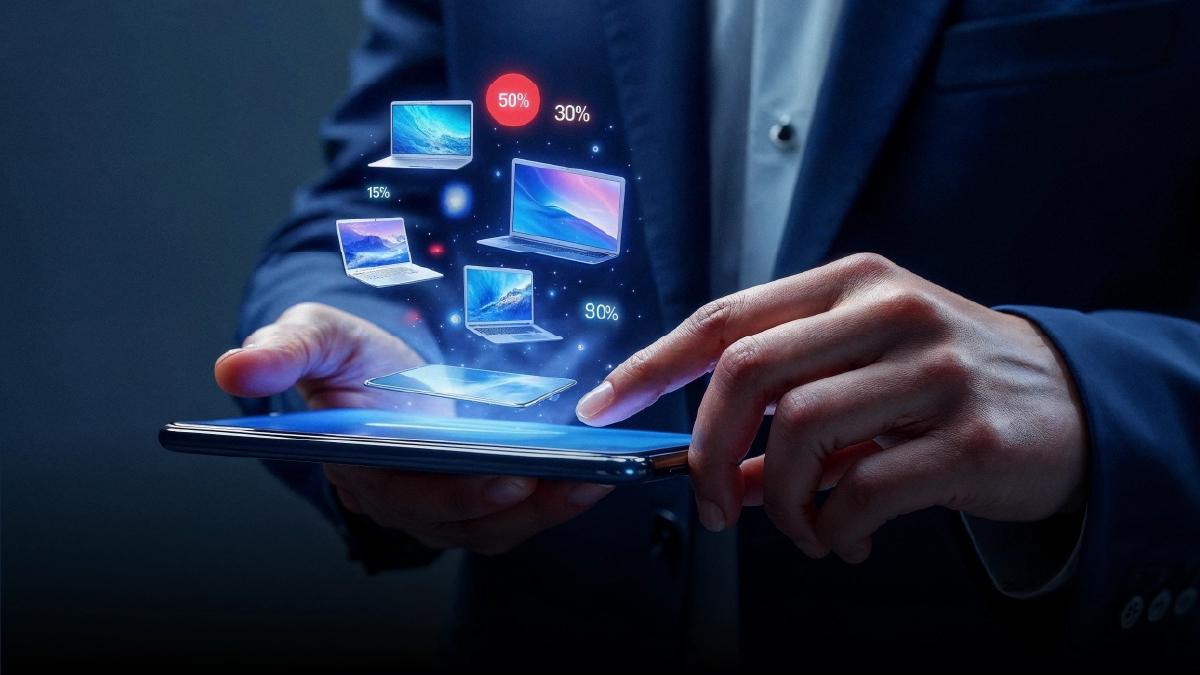 Marketing is moving faster than anyone can keep up with. Honestly, it’s almost impossible for a team to handle all the data manually. AI steps in and kind of takes over the heavy stuff. It looks at billions of data points, picks up patterns we might not even notice, and sometimes seems to know what customers will do before we do. Things that used to take weeks now happen in seconds. And those micro-segments? They just appear, almost on their own, giving insights that used to feel out of reach.
AI also makes personalization way easier. Each customer sees content, messages, and offers that feel like they were made just for them. All that dynamic creative stuff and hyper-segmented emails? It pretty much runs on its own. Humans don’t have to babysit every little detail anymore. Leads start turning into loyal customers faster, campaigns just flow better, and teams can finally breathe and think about the bigger-picture stuff instead of getting stuck in constant micro-management.
The numbers are kind of crazy. Adobe’s 2025 AI and Digital Trends report says AI is moving beyond experiments and actually producing results. U.S. retail websites saw traffic from generative AI sources jump 1,200 percent between July 2024 and February 2025. That’s not just impressive but it shows AI can really drive revenue, speed up campaigns, and stretch marketing dollars further than we thought possible.
But here’s the thing; AI by itself won’t win the day. The real edge comes when humans let it do the heavy lifting and focus on the parts only we can do is strategy, judgment, creativity. The leaders who figure out how to mix AI efficiency with human insight are the ones actually shaping where marketing goes next. The tools are ready. The data is there. The edge goes to whoever acts first.
Also Read: The Future of Martech Leadership: From Technology Adoption to Strategic Transformation
Human Creativity is the Irreplaceable Core of Impact
 AI can kind of read the room. It can guess what people might feel, predict sentiment, even copy tone. But it doesn’t actually feel anything. It doesn’t know why a line gives you goosebumps or why a story makes people care. That part is human. Real connection needs context, memory, culture, instinct. Machines don’t have that. We do.
Then there is originality. AI works with what already exists. Humans invent what doesn’t exist yet. We take chances, flip ideas around, sometimes fail completely and still end up with something nobody expected. That leap, that wild idea, comes from instinct and gut. AI can’t do it.
Someone also has to watch the brand. AI can follow rules but it won’t know when a campaign feels off or crosses a line. Humans set the boundaries, protect the story, and protect trust. That is not optional.
Pure AI content becomes predictable fast. Feeds fill up with copy that looks fine but says nothing. Humans bring the spark, the surprise, the edge. They bring taste, humor, and a bit of risk too. That is what makes brands feel alive.
AI can scale output. Humans make it count. That mix is what keeps marketing from turning into background noise. Without humans in the loop, everything becomes just data points and templates. The companies that figure out how to pair AI with human insight are the ones that stand out.
At the end of the day, AI does efficiency. Humans do meaning. Both matter, but humans are what give marketing impact.
How Humans and AI Actually Work Together
AI can handle a lot of heavy lifting, you know, the boring number-crunching and repetitive stuff. But it doesn’t make campaigns actually meaningful by itself. The real results come when humans step in and work with it. There’s no rigid framework here, just a few things that matter if you want this to actually work.
First, humans have to pick what matters. AI will throw out tons of options, all sorts of ideas, but someone has to decide what actually fits the brand and might hit the audience the right way. That’s judgment, taste, gut feeling. Machines can’t feel that.
Then there’s watching what actually works. Data speak of one narrative, while humans detect minute details which are not represented in the dashboards. Such feedback is sent to the AI and, hence, it will become smarter through time. It is not an instant process. Rather, one has to persist, take a step back, adjust, and continue to refine their work.
Culture is also huge. If teams are scared AI will replace them, nothing works. People need to feel safe experimenting, sharing ideas, and mixing what they know with what the AI produces. Otherwise, the tech just sits there, doing work nobody notices.
It’s already happening. HubSpot’s State of Marketing 2025 report indicates that AI use in content creation accounts for approximately 35%, data analysis, and insights for around 30%, while workflow automation takes up nearly 20%. And, 65% of marketers’ executives assert that their groups’ budgets for AI and automation in 2023 will be larger. Workers have already begun to leave their repetitive tasks and be involved in strategic, planning, and visionary thinking activities instead of just doing things manually.
Prompting, checking, guiding, and making judgment calls are the new human jobs. You’re not creating every post yourself. You make sure the AI is doing something that actually works, fits the brand, and reaches the right people. You keep it all on track, tweak where needed, and make the calls the machine can’t.
When that balance happens, it actually works. Artificial intelligence provides you with the advantages of faster processing, wider coverage, and insights that you could never handle single-handedly, but it is the humans who maintain the energy. This energy is what characterized marketing as being authentic, unforgettable, and really impactful to people rather than just contributing to the noise of the market.
The New Executive Leadership Mandate
AI is not only a fast-working tool. To be honest, it is more than that. Leaders have to take notice. It is not enough to turn it on and expect it to do the right thing. Someone has to monitor it, verify it, and ensure that it does not go wrong, particularly when it is visible to the customers. Humans still need to call the shots.
And then there’s the team side. Throwing money at technology doesn’t help if people don’t know how to use it. Creative humans, strategic humans, they’re the ones who make AI actually do something useful. Learning how to prompt it, check it, tweak it, guide it in the right direction and that’s now part of the job.
Companies are already moving fast. The Work Trend Index for 2025 says about 78% of leaders are considering hiring for AI-specific roles. For frontier firms, it’s even higher, ninety-five percent. That shows this isn’t optional. You can’t wait to catch up later.
At the end of the day, AI isn’t about just getting things done faster. It’s about doing bigger, more meaningful work. Humans plus AI together can make campaigns smarter, faster, and still human. Leaders who figure out how to balance speed and judgment, insight and creativity, they’ll be the ones actually making a difference. It’s tricky, yes, but that’s the advantage right there.
Leading the Hybrid Future
Marketing isn’t about just having the fastest AI or the smartest human. The real edge goes to the people who can mix both. The ones that are capable of passing the AI the major tasks and still having the strategy, creativity, and judgment in the human side are the ones that will get the most out of marketing. That’s where the clash between AI-Driven marketing vs. Human creativity lies. The hybrid approach that actually wins campaigns, grows ROI, and makes brands matter.
If you want to stay ahead, you can’t just operate. You have to orchestrate. Make the tools work for you, guide the team, keep the spark alive, and make sure the work actually connects. That’s the hybrid future.
Comments are closed.