

Open Netflix and you are not really choosing what to watch. The platform is choosing how to show options to you. That difference matters. Streaming libraries are massive. Choice should feel empowering, but at scale, it usually becomes overwhelming. This is where hyper personalization steps in, not as a design trick, but as a core business system.
Netflix itself explains that its recommendation system is built to tailor suggestions at an individual user level, not at a broad audience level. According to the Netflix Help Center, the platform uses an innovative recommendations system designed to personalize what each member sees based on their behavior, not just what is popular globally. That single statement sets the direction for everything else Netflix does.
Hyper personalization here is not about sending better emails or pushing trending shows. It is about shifting from one to many targeting to true one to one decisioning. In MarTech terms, this is the move from demographic segmentation to behavioral intelligence, where every click, pause, rewatch, and abandon feeds the system.
Netflix’s scale forces this approach. When millions of viewers across regions, cultures, and languages open the same app, generic personalization breaks fast. What survives is a system that reacts in real time, learns continuously, and treats data as the product, not a byproduct.

Also Read: How Netflix’s Martech Stack Delivers Personalization at Scale
Why Netflix Moved Beyond Demographics and Built Taste Clusters
 Age and gender look neat on slides. In reality, they explain very little about taste. Netflix learned this early. Two people of the same age in the same city can have completely opposite viewing habits. One might binge crime documentaries while the other loops animated comedies. Demographics fail at that level.
Instead of grouping users by who they are, Netflix groups them by how they behave. These behavioral communities are often referred to internally as taste clusters. The idea is simple but powerful. Viewers are mapped into dynamic groups based on viewing patterns, completion behavior, and content affinities. These clusters shift as behavior changes.
This is where hyper personalization stops being a buzzword and becomes operational. A viewer is not locked into a static profile. Their taste evolves. The system evolves with them. That is also why Netflix avoids rigid personas. Personas age. Behavior updates every session.
From a MarTech perspective, this mirrors how advanced customer data platforms are supposed to work but rarely do. Instead of predefining segments, Netflix lets signals define the segment. This approach solves a problem competitors often ignore. Cultural context changes fast. Local trends spike and disappear. Behavioral clustering adapts without manual intervention.
The outcome is relevance at scale. Not because Netflix knows who you are, but because it understands what you respond to right now.
How Netflix Personalization Actually Works Inside the Engine
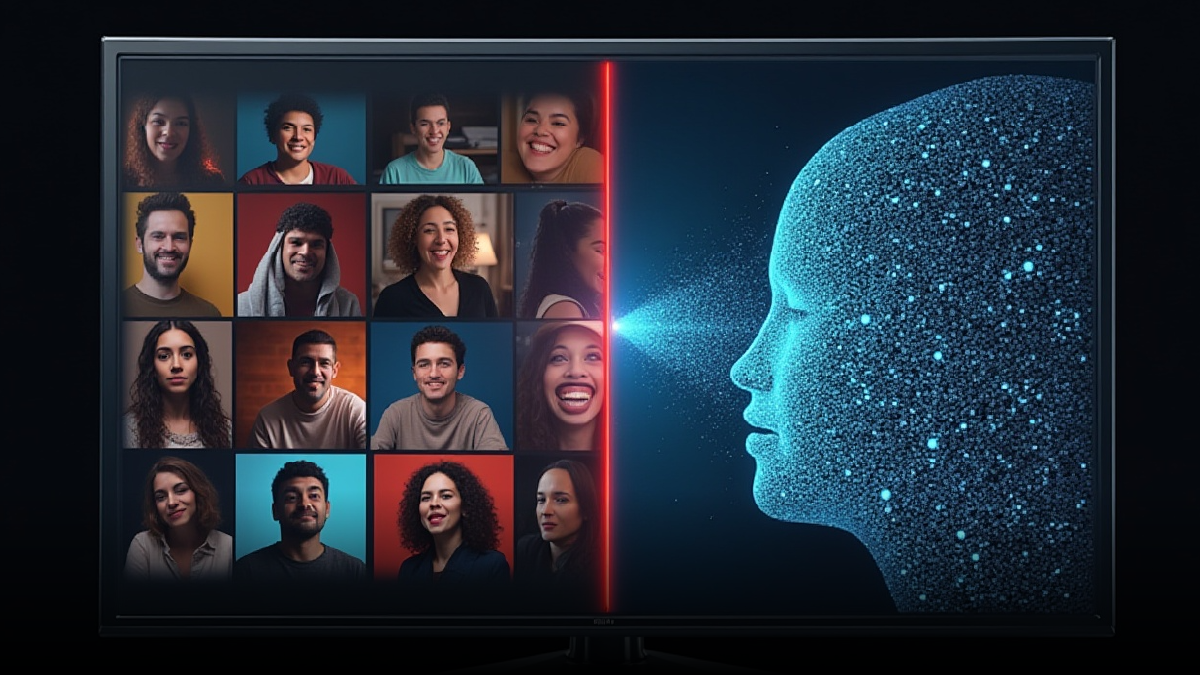 Netflix personalization is not driven by one algorithm. It is a system of systems.
According to Netflix’s official Tech Blog, the recommender is a complex setup made up of distinct machine learning models. Each model supports specific personalized features such as Continue Watching or Top Picks for You. This matters because it explains why the experience feels cohesive instead of random.
Collaborative filtering forms the base layer. This model predicts preferences by comparing patterns across similar viewing behaviors. If viewers with similar habits enjoyed certain titles, the system learns from that overlap. But Netflix does not stop there.
Contextual decisioning adds the real time layer. What you see changes depending on when you open the app, the device you use, and how stable your connection is. Someone opening Netflix on a phone during a commute does not need the same interface as someone settling in on a smart TV at night. This is where hyper personalization becomes situational, not just historical.
Visual personalization is another critical layer. The same show can appear with different artwork depending on what the system believes will resonate. A thriller fan may see intensity highlighted. A romance viewer may see emotional cues instead. The content does not change. The framing does.
The key takeaway is this. Netflix does not personalize content. It personalizes decisions. What to show, how to show it, and when to show it are all calculated continuously.
How Personalization Protects Retention and Content Value
Personalization is often framed as a growth lever. In reality, it is a retention engine.
Netflix researchers have shown through academic work that simplifying personalization models leads to measurable engagement loss. Replacing advanced personalized systems with simpler alternatives can reduce engagement by roughly four to twelve percent. That drop is not cosmetic. At Netflix scale, even small engagement shifts have direct revenue implications.
This is where content lifetime value comes into play. Netflix evaluates shows not only by how many users start them, but by how effectively they keep users subscribed. Completion rate, viewing velocity, and rewatch behavior all signal whether a title strengthens retention.
Hyper personalization connects these signals back into the system. If a viewer finishes a series quickly and immediately starts another recommended title, that pattern lowers churn risk. If a viewer stalls mid-season and stops returning, the system adjusts aggressively.
This feedback loop turns content into a retention asset. Shows are not just entertainment. They are tools for reducing subscription fatigue. That framing is often missing in marketing discussions, but it explains why Netflix invests so heavily in personalization infrastructure.
How Netflix Tests Everything Without Slowing Down
Netflix does not guess. It tests.
Every major and minor change runs through experimentation. Layouts, row placement, artwork selection, autoplay behavior, even how categories are named. But testing at this scale creates a new problem. Traditional A B testing is too slow.
Netflix solves this using adaptive experimentation techniques that allocate traffic dynamically based on early performance signals. Instead of waiting weeks for results, the system shifts exposure toward better performing variants in near real time.
This approach mirrors what advanced MarTech teams aim for but struggle to execute. Testing becomes continuous, not episodic. Learning becomes constant, not quarterly.
The reason this matters for hyper personalization is simple. Personalization models decay fast if they are not challenged. Viewer behavior shifts. Cultural context changes. What worked last quarter may underperform today. Continuous testing prevents stagnation.
More importantly, experimentation is embedded into the product, not layered on top. That integration is what allows Netflix to move fast without breaking trust.
The Real Risks and What Comes Next for AI in Streaming
Hyper personalization is powerful, but it is not risk free.
One challenge is the filter bubble. If a system only shows what feels safe, discovery dies. Netflix actively balances familiarity with exploration by injecting controlled novelty into recommendations. This keeps the experience fresh without overwhelming users.
Another shift is coming from generative AI. Trailers, previews, and even summaries can be generated dynamically to match viewer preferences or mood. This does not replace storytelling. It changes how stories are introduced.
Enterprise data supports this direction. Adobe reports that eighty-seven percent of organizations using AI driven personalization see increased customer engagement. That tells us the market is moving toward deeper personalization, not away from it.
The challenge will be restraint. Personalization should guide, not trap. Netflix’s long term success depends on keeping that balance intact.
What MarTech Leaders Should Actually Learn from Netflix
Netflix proves one thing clearly. Data is not a reporting layer. It is the product itself.
This lesson extends beyond entertainment. HubSpot’s research shows that ninety-three percent of marketers say personalization improves leads or purchases, and seventy-four percent say content marketing builds loyalty. The principle holds across industries.
The actionable insight is simple. Stop over investing in who the customer is. Start understanding how they behave. Hyper personalization works when systems listen continuously, adapt quietly, and respect user intent.
Netflix does not win because it has more data. It wins because it uses data better, faster, and with purpose.
If you want to compete at scale, that is the real benchmark.
Comments are closed.