
Decoding SEMrush: A Study in Tools, Trust, and Transformation

If Google is the library of the internet, SEMrush is the librarian who quietly points you toward the right shelves and sometimes nudges you toward what everyone else is checking out. Millions of marketers, entrepreneurs, and students rely on it to not just find information but to understand which strategies actually work and how to improve them.
At first glance it looks like an SEO tool, but it has evolved into much more. Today SEMrush is a full-scale marketing platform. It maps competitor strategies, dissects ad campaigns, measures content performance, and even forecasts market opportunities. In other words, it moved from being a toolkit for specialists to a decision-making hub for entire marketing teams.
The scale of adoption shows how far it has gone. More than 280 universities have added its programs to their courses. Over 18,000 students have earned certifications through its free Academy, which now offers ninety courses that turn theory into campaigns that deliver results. Each month more than a million free users log in to track competitors, explore dashboards, and refine their strategies. What they share is the same set of tools and insights. What differs is how they use them.
Revenue numbers tell another part of the story. In the second quarter of 2025 SEMrush made just over 108 million dollars, about twenty percent higher than the same quarter the previous year. Annual recurring revenue reached 435 million dollars, with 118,000 paying subscribers. The number of clients spending more than fifty thousand dollars annually jumped by eighty-three percent. Growth looks unstoppable. Yet as enterprise clients become a bigger focus, smaller businesses and independent marketers risk being left behind.

This is the paradox SEMrush must solve. The growth loop is powerful. Every new user generates more data, the tools get sharper, and that attracts even more users. But as high-value clients dominate, the benefits may tilt toward them. Balancing scale with accessibility is no longer just a business question. It is the challenge that will define how the platform grows from here.
Shadow University
The platform has quietly become a shadow university for marketers around the world. It provides standard methods and tools that give users access to the same core insights. In a way, it is like handing every marketer the same playbook. The advantage comes from how creatively it is applied. With 26.7 billion keywords and over 808 million domains across 142 markets, even small businesses can operate with resources once reserved for large enterprises. At the same time, competitors often work with similar data, which makes standing out more challenging.
Access on this scale is empowering. It opens doors for experimentation and strategy, but it also raises the bar. Simply following what others are doing rarely produces distinctive results. Marketers who combine insights with their own creative ideas and brand perspective tend to perform better. Some will discover approaches others have overlooked. Others may find themselves competing in crowded spaces with less impact.
The platform’s growth loop reinforces this effect. Each new user adds data, which improves the tools, which attracts more users. The cycle continues to expand. As enterprise adoption grows, however, the focus subtly shifts toward high-value clients. Smaller businesses still gain value, but they need to apply insights thoughtfully and strategically to achieve the same results.
The real challenge is balance. The platform makes knowledge widely available, but success depends on how users act on it. Those who experiment, innovate, and use insights strategically can gain a significant advantage. Users who stick too closely to standard methods may see slower growth, even with the same resources. Over time, the difference between creativity and repetition becomes clear. methods may see slower growth, even with the same resources. Over time, the difference between creativity and repetition becomes clear.
The Numbers Behind Growth
Numbers reveal much about the platform’s performance, but they don’t tell the full story. In the second quarter of 2025, it generated just over 108 million dollars in revenue, roughly twenty percent more than the same period the previous year. Annual recurring revenue reached 435 million dollars, supported by approximately 118,000 paying customers. Growth among enterprise clients is particularly notable, with the number paying more than fifty thousand dollars annually increasing by eighty-three percent. This shows the platform is scaling rapidly, but it also hints at a shift in focus toward high-value accounts.
Smaller businesses still gain value from the tools, but the increased emphasis on enterprise clients can subtly affect which features receive priority or the type of support offered. Growth alone does not guarantee that all users benefit equally.
The platform’s growth loop illustrates the underlying mechanics. Every new user generates additional data, which enhances tools and draws more users. However, as enterprise adoption expands, the benefits naturally concentrate toward these high-value accounts. Smaller businesses need to work strategically to make the most of the platform’s offerings, applying insights thoughtfully rather than relying on access alone.
Understanding these numbers provides insight into the balance the platform must maintain. Rapid expansion is impressive, but sustainability depends on delivering value across the full spectrum of users. Those who can interpret insights creatively and apply them in unique ways continue to gain an edge, while others may find the competitive advantage less pronounced.
The Weight of Data and the Subtle Risk of Homogenization
SEMrush does not play in the shallow end. The platform claims to track billions of keywords. For a marketer or a business, this sounds like stepping into a library where every book ever written is indexed and ready. The sheer depth is impressive.
But here comes the interesting twist. With data at that scale, the very thing that gives users an edge can also create a blind spot. When thousands of professionals rely on the same insights, there is a tendency for strategies to start looking alike. Competitors may chase the same keywords or craft nearly identical content because the signals guiding them are drawn from the same pool.
Think of it like a crowded highway. Everyone has a GPS, and all devices are pulling directions from the same map. At first, the tool helps drivers avoid traffic. Soon enough, though, the shortcuts get crowded because too many people are taking them. The result is a loop of sameness.
This does not mean the tool loses value. Far from it. What it shows is that data alone cannot create differentiation. Businesses that simply mirror the insights without applying their own judgment may find themselves blending into the noise. Those who add brand voice, creativity, and a willingness to test new paths can still stand out, even when using the same data foundation as everyone else.
So the real story is not only about how much SEMrush tracks, but also about how users choose to act on that information. Scale without imagination risks flattening strategy. Scale combined with originality, however, becomes a competitive moat.
From SEO Tool to Growth Ecosystem
SEMrush started small. Back then it was mostly about SEO. People logged in to check keywords, spy on rankings, maybe peek at a competitor’s traffic. That alone made it useful.
Over time, the tool grew fatter. Features stacked on features until the old SEO label no longer fit. Today, the company talks about itself as an entire ecosystem. SEO is still there, but now you get paid media, content tracking, and even social data.
For a business, this can feel like a relief. Instead of juggling five different platforms, you stay in one place. Less hassle, fewer logins. More importantly, the data starts connecting in ways that are easy to miss when you scatter it across tools. A blog post drives traffic, some of that traffic converts on ads, and then you see echoes on Instagram. It lines up like puzzle pieces.
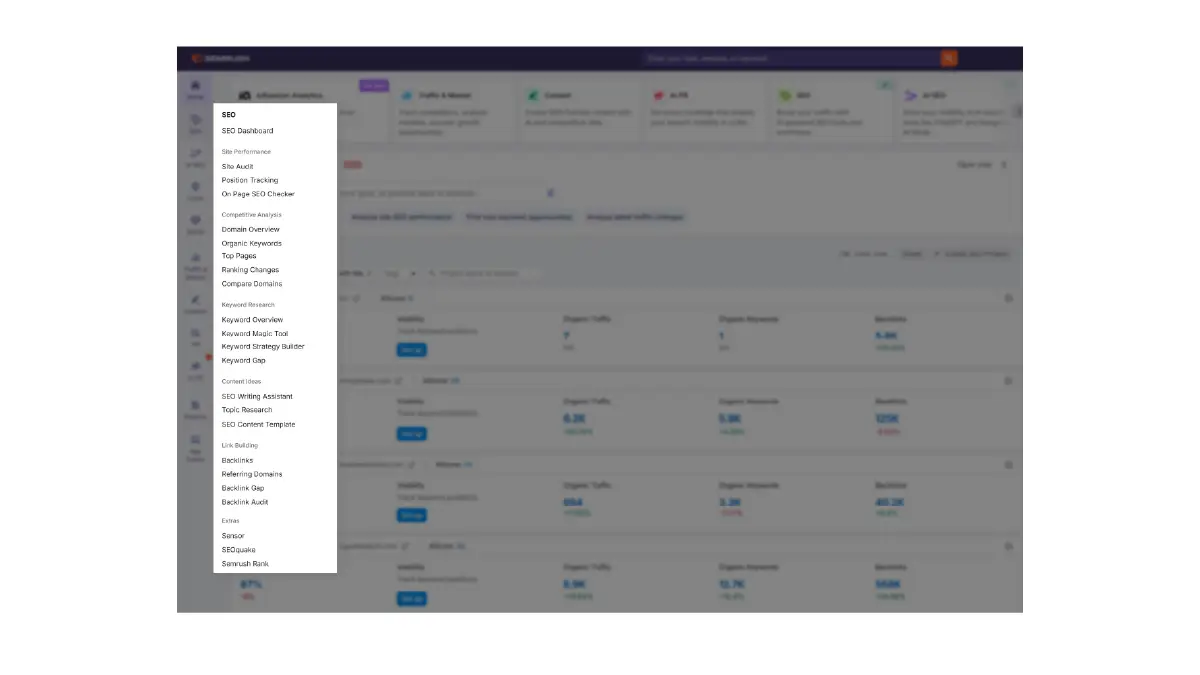 Of course, nothing is perfect. Some specialists think the platform spreads itself thin. The ad reports might not go as deep as Google’s. The social features may not satisfy a hardcore strategist. That’s the trade-off.
Still, the idea behind the shift makes sense. Marketing no longer lives in silos. Growth depends on watching how different channels feed one another. What started as a niche SEO helper has now turned into a map of the larger marketing game?
The Competitive Moat and Network Effects
SEMrush has been around long enough to build something most startups dream about. A moat. Not a flashy one like a brand new AI breakthrough, but a quieter kind that comes from time, data, and trust.
Every user who runs research feeds the platform with more signals. Every backlink tracked, every keyword tested, every domain checked adds another brick to the wall. Over the years that data has turned into a kind of flywheel. The more people use the tool, the richer the insights get. The richer the insights, the harder it becomes for rivals to catch up.
That is not easy to replicate. A new tool can look sleek, maybe even cheaper, but it cannot instantly recreate a decade of crawling the web. By the time it gets close, SEMrush has already pushed further. That constant compounding is what keeps it ahead.
At the same time, the network effect is not invincible. If users feel the platform grows too crowded or too pricey, they may start looking for alternatives. Smaller, more agile tools can sometimes lure niche segments by going deep where SEMrush stays broad. That is the opening every challenger tries to exploit.
Yet the bigger picture still leans in SEMrush’s favor. Trust built over years, a dataset that keeps expanding, and a habit loop that keeps users coming back create a defense that is tough to break. It may not look dramatic on the surface, but in practice it is one of the strongest assets the company owns.
Monetization and Pricing Dynamics
Money talk is always tricky. SEMrush runs on a subscription model. Different tiers, different features. Straightforward in theory. In practice, it is where many debates start.
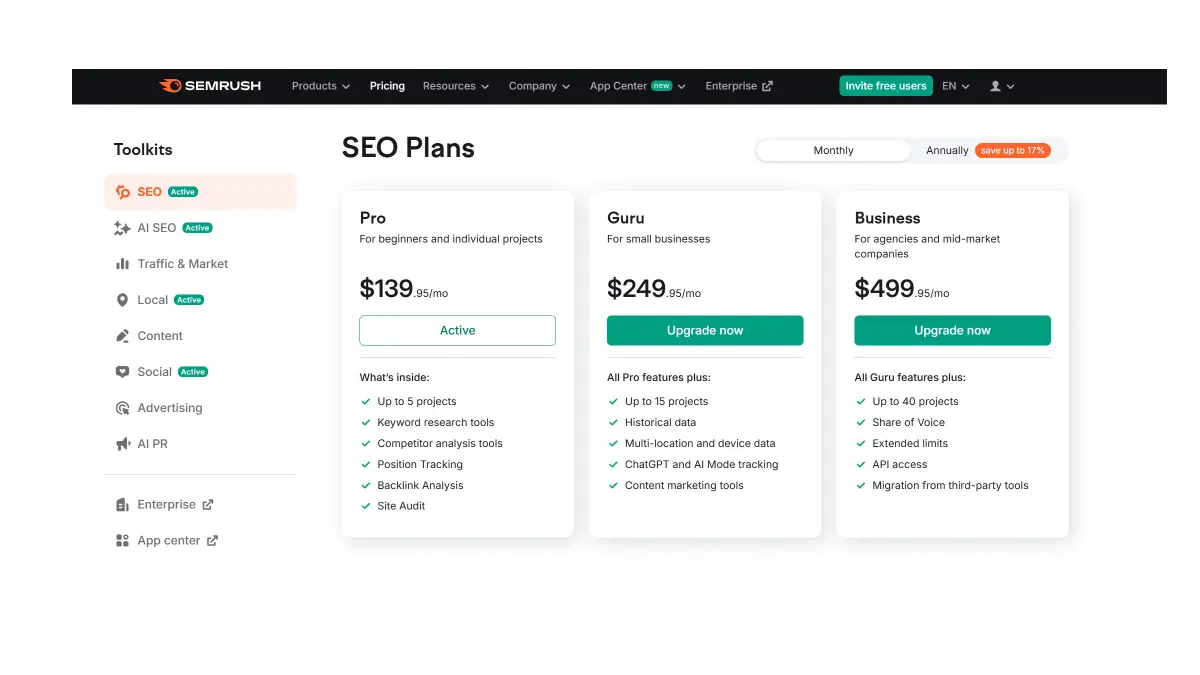 For freelancers and small businesses, the entry plan already feels like a stretch. Some swallow it because the tool saves time. Others hesitate, wondering if they can manage with cheaper options. Larger agencies usually go for the higher tiers. They get the integrations, the advanced reporting, the bulk limits. For them the price tag feels justified.
Here is where it gets interesting. Some users swear the product is worth every dollar. They point to the sheer scope of data, the convenience of having it all in one place. Others argue the opposite. They see the price climbing faster than the value. Competitors know this and often position themselves as the ‘affordable alternative.’
The stance SEMrush takes is bold. It does not race to the bottom. Instead, it leans into being premium. Almost like saying, if you want the standard, you pay for the standard. That confidence has helped shape its brand.
Still, there is a risk. Marketing budgets are not always stable. When cuts come, price becomes the first target. A business that once stayed loyal may test a cheaper tool just to reduce costs. Some stay, some switch back, and a few never return.
So far, SEMrush seems to manage the balance. Growth has not slowed. The customer base still pays, which suggests reliance is high. Yet the question lingers. At what point does premium turn into too expensive? That line is thinner than it looks.
Innovation and the AI Angle
SEMrush began in 2008 as a straightforward keyword research and competitor analysis tool. Its earliest innovation was giving users a direct look into how rivals were ranking, something that felt like peeking behind the curtain of Google itself. From that foundation it steadily expanded. Site Audit tools made technical SEO more accessible. Backlink Analytics gave marketers a clearer way to measure authority. A PPC toolkit let advertisers break down competitor campaigns. Content Marketing features layered on strategy for blogs and landing pages. What started as a single-purpose utility turned into an entire suite that could cover most of a marketer’s workflow.
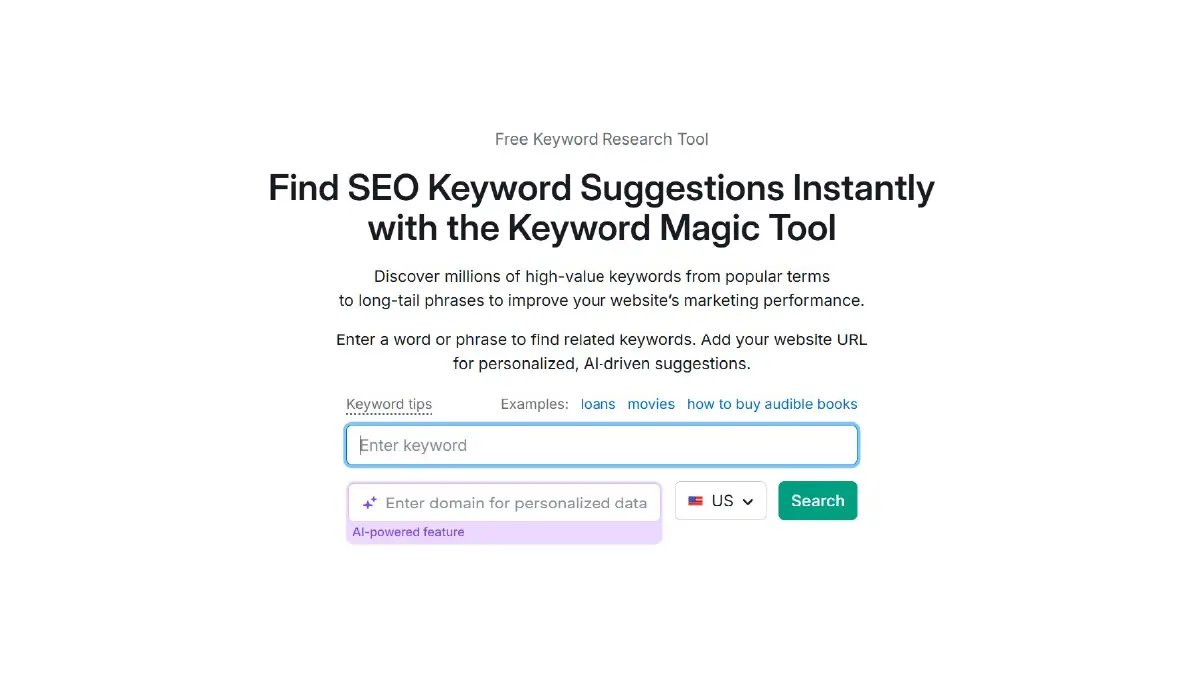 Not every addition was groundbreaking, but a few stood out as pure innovations that became widely popular. The Keyword Magic Tool made deep keyword research usable at scale. Position Tracking gave real-time clarity on how strategies were performing. SEMrush Academy, which now runs ninety courses, was an unexpected innovation in education, teaching users how to actually turn those tools into campaigns. The Marketplace connected marketers with services and templates, expanding the product into an ecosystem. Each of these moves pushed SEMrush beyond being a dashboard into being a hub.
The latest layer of innovation is tied to artificial intelligence. SEMrush has rolled out AI-powered content generation, keyword clustering, and optimization tools that promise faster insights and smarter recommendations. Some marketers embrace these features, using them to generate drafts, spot gaps, and test variations quickly. Others remain skeptical, arguing that AI outputs can feel flat without human judgment.
The opportunity for SEMrush lies in using its greatest advantage: data. With years of search trends, backlink maps, and user behavior patterns, it holds one of the richest datasets in marketing. If that depth fuels its AI, SEMrush could deliver insights no smaller rival can match. The risk is that if it only launches the same AI features already offered by leaner startups, it may lose its edge.
So far the steps feel more incremental than transformative. Useful, yes, but not yet redefining. The pace of change in AI means that today’s experiments could become tomorrow’s essentials. The real measure of innovation for SEMrush will be whether it continues to set the agenda in digital marketing or slips into the role of just keeping up.
Challenges and Critiques
Big platforms attract big praise, but also big complaints. SEMrush is no different.
Some users say the tool feels like too much. You log in, and suddenly there are graphs everywhere, filters you have never touched, menus that go three levels deep. Power users love it. Beginners? Not always. For a freelancer just trying to check a handful of keywords, the dashboard can feel more like a wall than a doorway.
Accuracy sparks another round of debate. SEMrush pulls data from crawling the web, then estimates traffic and rankings. Most of the time the numbers are close. Close enough for trends, close enough to guide a campaign. Still, if you are walking into a client meeting with those numbers, ‘close enough’ can start to feel shaky. One mismatch and you spend more time defending the tool than the strategy.
Support is hit and miss. Some people swear the team is fast and helpful. Others share stories of waiting days, only to get a generic reply. And because the price is premium, expectations run higher. When support stumbles, the disappointment lands harder.
Competitors, of course, use all this to their advantage. They say they are simpler, lighter, cheaper. Some even highlight SEMrush’s weaknesses directly in their marketing. For them, the giant’s complexity becomes their opening.
Are these deal breakers? For most long-term users, no. They accept the flaws because the upside still outweighs the pain. But the complaints matter. They show where cracks exist, and cracks have a way of spreading if ignored.
Customer Stories and Use Cases
Tools mean little without people using them. What makes SEMrush stand out is how different types of users shape it to their needs.
Take the small business owner running a local shop. For them, SEMrush might be a lifeline. They type in a few keywords, see what neighbours and competitors are ranking for, and tweak their website copy. It is not glamorous, but it can push them from page three to page one. That bump can be the difference between an empty store and a steady flow of customers.
Agencies approach it differently. They dive into competitor analysis, campaign tracking, and backlink audits. For them, the tool is less about one quick win and more about proving results to clients. A clean SEMrush report dropped into a presentation can look like magic. Clients may not understand the details, but they understand charts going up.
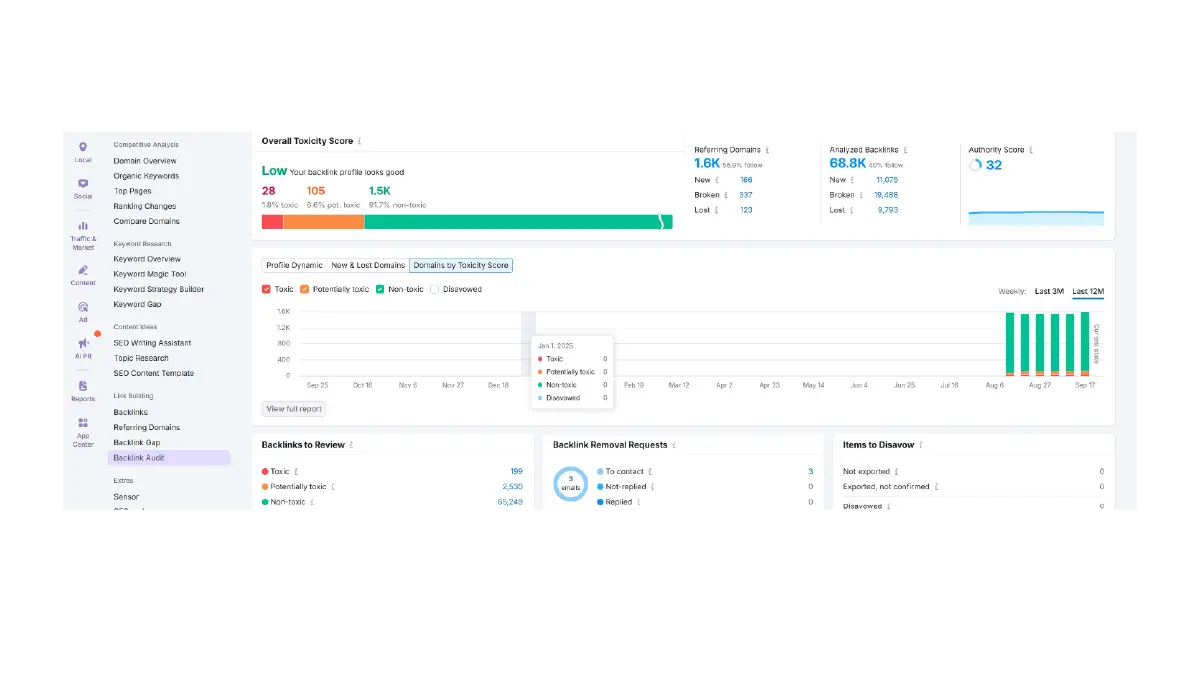 Then there are content teams. They use the tool to plan topics, spot gaps, and make sure they are not writing the same thing as everyone else. Sometimes they follow the suggestions to the letter. Other times they treat them as guardrails, using the data as a starting point for something more creative.
What ties all these stories together is dependence. Different users lean on different features, but in each case the platform becomes part of their daily workflow. That habit is hard to break. Even if frustrations exist, switching feels like learning a whole new language. Most stick around, which says as much about behaviour as it does about the product itself.
Final Takeaway
SEMrush is not just another marketing tool anymore. It has grown, maybe faster than anyone expected. From a simple SEO helper to something that tries to cover almost every corner of digital growth, the journey is obvious.
Still, cracks show. Some people love the depth, others complain it is too much. Price is always part of the debate. Accuracy too. And yet, here we are. The platform keeps growing. Customers keep paying.
Why? Probably because habits are sticky. Once a team sets up its workflow inside a tool like this, leaving feels like more work than staying. Add the fact that the data is massive and the reports look convincing, and you get a product people do not easily abandon.
The interesting part is what happens next. Does SEMrush keep adding more until it becomes too broad? Or does it sharpen what it already has? Hard to say. What is clear is that the tool gives the map, but the drive still belongs to the user.
Comments are closed.