
The Apple Marketing Playbook: How Experience-First Strategy Drives Trillions in Revenue

Marketing leaders have admired Apple’s rise for decades. They also feel a deep curiosity about how it happened. How can a company keep its prices high, build strong brand loyalty, and launch products that become global hits? The answer isn’t a secret ad formula. It’s a bold choice: prioritize an experience-first strategy. This isn’t just a marketing tactic. It’s the main system of the whole company. This method helped create one of the most valuable companies ever. In fact, Apple posted in 2024 its quarterly revenue of US$ 94.9 billion, up 6% year over year, with the iPhone alone generating a major share.
As marketing chiefs, we often get caught up in the details. We focus on click-through rates, cost-per-acquisition, and quarterly lead generation targets. Apple’s playbook challenges us to lift our gaze. Marketing isn’t just about selling a product. It’s the lasting echo of a great product experience. This is a holistic approach. Product design, retail, service, and communication come together in a clear brand promise. This playbook shows how to create lasting value and build consumer trust.
Product as the Primary Marketing Vehicle
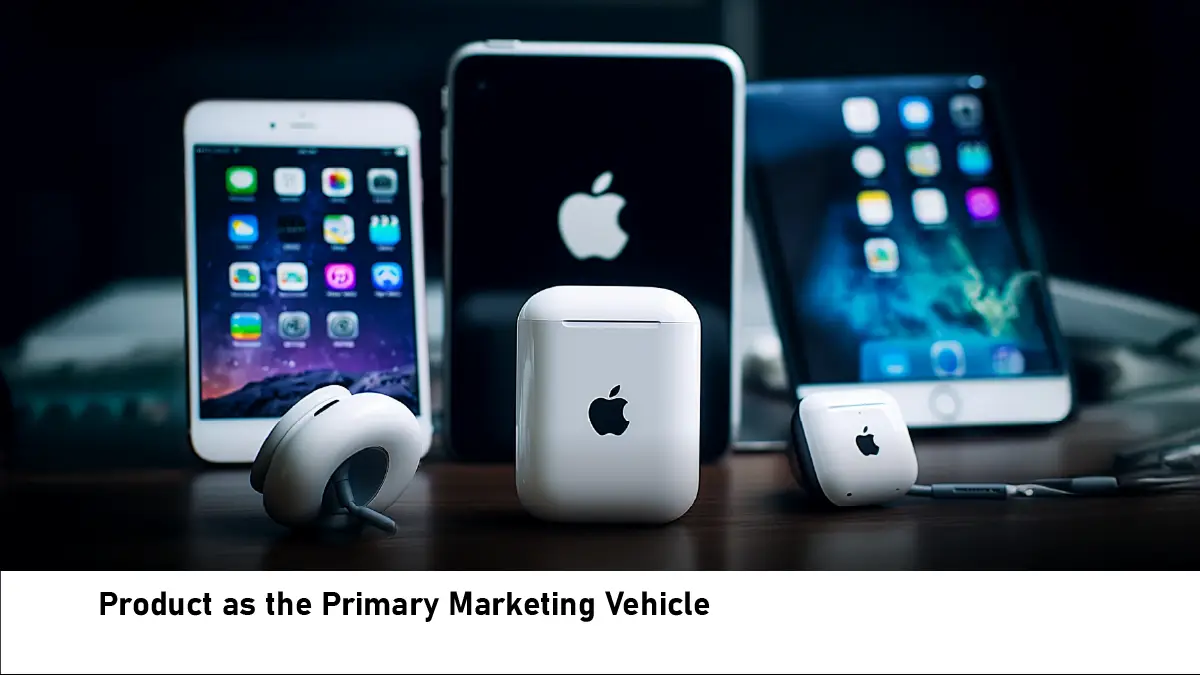 A great campaign can’t fix a mediocre product. Apple’s first commandment is simple: marketing starts with the product. Every design choice, like the aluminum body of a MacBook or the satisfying click of the Digital Crown on an Apple Watch, sends a marketing message. This strong focus on craftsmanship, easy use, and clean design makes the product its best advocate. The proof is in the numbers, Apple’s Q3 2024 revenue included US$ 39.3 billion from iPhones, US$ 7 billion from Macs, US$ 7.2 billion from iPads, and a record US$ 24.2 billion from services.

Consider the act of unboxing an Apple device. It’s a carefully designed ritual that sparks a sensory reaction. The box’s weight, the exact pull of the tab, and the layout of parts all feel intentional and important. This isn’t random. A thoughtful welcome sets the tone for the entire relationship with the device. Before seeing any ads, the user receives a clear message about the brand’s values: quality, attention to detail, and respect for customers. The product does more than meet a need. It builds an emotional bond that no thirty-second ad can match.
Also Read: The Secret Behind Nike’s Martech Stack and Personalized Marketing
The Art of the Controlled Revelation
Apple has turned product launches into exciting events. They treat these reveals like performances, not just company announcements. The stage management of information is a critical component of their strategy. Apple controls the story from the first rumor to the last exciting reveal. This approach creates a buzz, driven by media hype and what consumers want.
This careful reveal has a strong psychological impact. The lack of prior information makes the official announcement feel like a true discovery. When Tim Cook or his predecessors speak, they don’t just share specs. They tell a story about human progress. They focus on the ‘why’ and the ‘how it feels,’ not just the ‘what.’ We mention megapixels and gigahertz, but we really focus on our experiences with them. They involve capturing great photos, creating movies, and connecting with family and friends. This story makes the product more than just hardware. It becomes a key that unlocks human potential. The launch event is a powerful marketing tool. It creates weeks of free media coverage and social chatter worldwide. Plus, the brand message stays clear and focused.
The Ultimate Lock-In Strategy
One great experience is powerful, but a network of connected, smooth experiences is hard to resist. This is the genius of the Apple ecosystem. The true product is not the iPhone, the Mac, the Watch, or the AirPods; the true product is the symbiotic flow between them all. iCloud seamlessly syncs your photos and documents. AirDrop allows for magical file sharing. Your Apple Watch unlocks your Mac and can answer calls from your iPhone.
This ecosystem builds a strong utility moat. It’s tough for customers to cross it. Switching costs aren’t only about money; they’re also about experiences. Switching from the iPhone to another platform breaks this smooth harmony of devices. You lose that easy continuity. This strategy transforms customers into loyalists. It changes the relationship from one-time buys to a lasting subscription for digital life. Marketing’s role is to showcase these magical moments, those ‘it just works’ interactions. It shows a clear understanding of what customers want: simplicity and harmony in a complex digital world. Apple’s ecosystem reflects this power, with over 79% of iOS users staying within Apple products and customer retention rates exceeding 90%. Moreover, according to a study in 2023, two-thirds (65%) of Apple handset owners globally said “I am loyal to the brand of my handset.”
Retail as a Temple
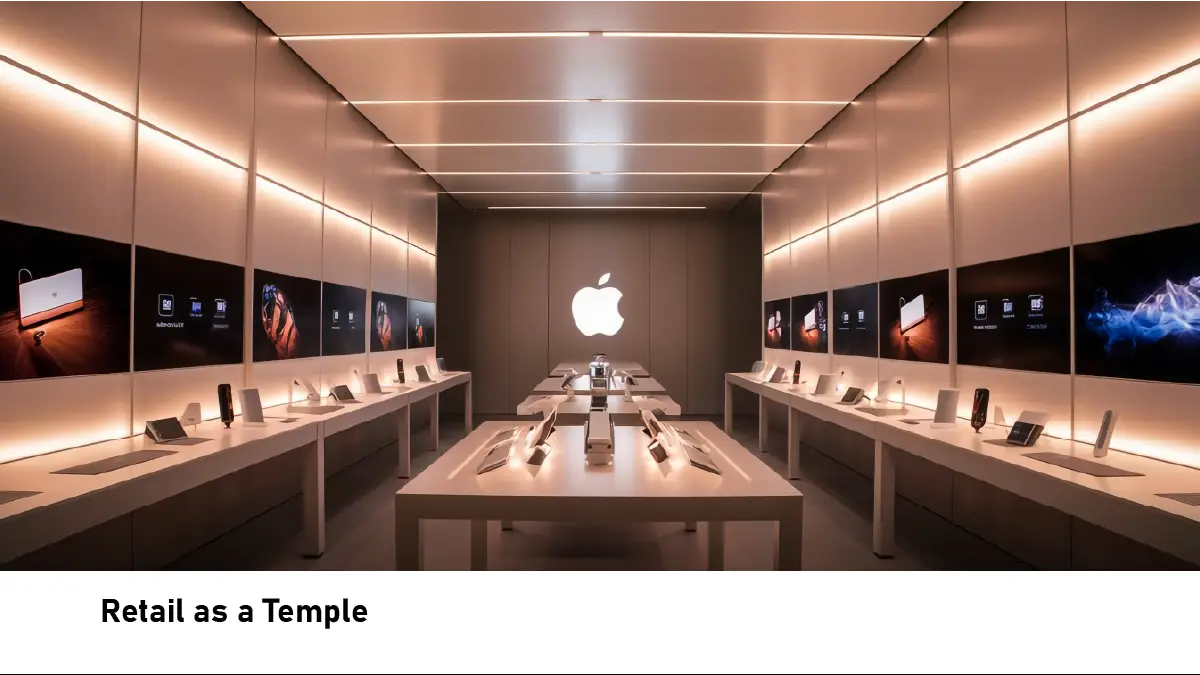 If the product is the religion, the Apple Store is its church. Steve Jobs didn’t just want a store for boxes. He wanted to build a town square for the digital age. Apple Stores showcase the brand’s ethos through their bright design, glass staircases, and open tables. They focus on discovery and interaction, not just transactions.
Not having traditional cash registers is a strong psychological choice. The salesperson with a mobile payment terminal isn’t just a cashier. They are a concierge, helping create experiences. The Genius Bar isn’t just a repair desk. It’s a help center that turns frustration into positive brand engagement. These spaces let customers touch and feel the Apple universe. They make the abstract more real. Every part of the retail experience quietly represents the brand. It shows messages of accessibility, expertise, and premium value.
The Power of Restraint
In a world full of loud brand messages, Apple’s marketing stands out for its restraint. They use minimal advertising. It highlights clean visuals, evocative music, and shows clear product benefits. They know their audience is smart and appreciates being treated that way. They don’t shout features; they whisper possibilities.
This applies to their entire communication strategy. Apple is very careful with its public messages, executive appearances, and data sharing. Each message feels heavy, thoughtful, and important due to this lack of communication. It fosters an aura of authority and confidence. Apple stands apart from other brands. While many chase trends on social media, Apple only speaks when it has something truly important to share. This restraint draws the audience in, helping them hear the message clearly above the digital noise. It also helps scale services, with Apple’s Services business is its second-largest segment, accounting for 24.5% of total revenues and 39% of gross profits in FY’24.
Building Your Own Experience-First Framework
The big question is: how can we use these principles outside of Cupertino? The lesson is not to copy Apple’s aesthetic but to adopt their customer-centric philosophy.
Start by evaluating the whole customer journey. Consider all aspects, from the first brand touchpoint to post-purchase support. Where are the moments of friction? Where are the opportunities to inject surprise and delight? Encourage your marketing team to work closely with product development and customer service. Remove internal barriers to ensure a smooth experience for all.
Change your metrics. Don’t just focus on transactions. Include experiential indicators like:
- Net Promoter Score (NPS)
- Customer effort score
- Brand sentiment
This will give you a fuller picture.
Most importantly, have the courage to simplify. Apple is strong because it says ‘no’ to many features. This lets them focus on perfecting the few that really matter.
The Apple playbook shows us that in a world of similar products, the best way to stand out is by delivering a great experience. Marketing isn’t the start of that experience; it’s the loudspeaker. Create a great product and a smooth ecosystem around it. You’ll see that the best marketing happens not on a screen, but in the hands and hearts of your customers. That is the true path to building not just revenue, but a legacy.
Comments are closed.